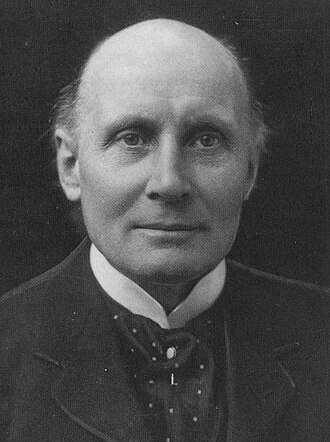
Alfred North Whitehead (1861–1947) was born in Ramsgate, Kent, and built a career on both sides of the Atlantic. For decades he taught mathematics and logic at Trinity College, Cambridge and at University College London, before accepting — at the age of sixty-three — an invitation to join the philosophy faculty at Harvard, where he produced his most ambitious metaphysical work. This dual trajectory, from mathematical rigour to cosmological speculation, defines his philosophy in a singular way: process thought does not emerge from a break with science but from a sustained philosophical meditation on its foundations.
Whitehead’s first major period, pursued in collaboration with Russell, culminated in the Principia Mathematica (1910–1913), a monumental attempt to ground arithmetic in pure logic. In The Concept of Nature (1920) he turned to the philosophy of nature, criticising what he called the “bifurcation of nature” — the artificial split between nature as perceived and nature as conceived by physics. Science and the Modern World (1925) broadened this critique into a full indictment of modern mechanistic materialism, showing how it starves aesthetic and religious experience, and introduced the notion of the “fallacy of misplaced concreteness”: the mistake of taking scientific abstractions (atoms, fields, forces) for the concrete real. The culmination of these reflections was Process and Reality (1929), a work of speculative metaphysics in which Whitehead proposed an alternative cosmology to the static substances of Descartes and Locke: the ultimate constituents of reality are not enduring things but actual occasions (or actual entities) — events of experience that arise, achieve their determination, and perish, thereby contributing to the becoming of new occasions. At its root, the universe is process and creativity.
Key Concepts
- Actual occasions (actual entities): the ultimate units of reality — not static substances but events of experience that constitute themselves through the process of becoming and cease upon attaining their determination (perishing). Every concrete entity, from an electron to a moment of human consciousness, is an actual occasion.
- Prehension: the manner in which an actual occasion grasps, integrates, and is shaped by prior occasions. More primitive and universal than sense-perception, prehension is a relation of apprehension that binds the past to the creative present of each event.
- Creativity: the ultimate category of Whitehead’s metaphysics — the principle by which the many are unified into something new. Creativity is not itself an entity but the condition of possibility for all novelty; no occasion merely repeats its predecessors.
- Fallacy of misplaced concreteness: the philosophical error of treating scientific abstractions — atoms, particles, quantified laws — as though they were more real than the concrete experience from which they are abstracted. Modern mechanism commits this fallacy systematically.
- Bifurcation of nature: the illegitimate dichotomy, criticised in The Concept of Nature (1920), between an “apparent” nature (colours, sounds, sensory qualities) and a “real” nature (invisible mathematical structure). Whitehead proposes to overcome this division within a single theory of experience.
- God’s primordial and consequent natures: Whitehead distinguishes God’s primordial nature — an eternal grounding in pure possibilities (eternal objects) — from God’s consequent nature — the reception and preservation of every actual occasion that perishes. God is not an omnipotent creator external to the process but an eminent participant within it.
Influenced by
- Plato — occasions that participate in eternal forms (eternal objects) echo the theory of Ideas; the remark that European philosophy is a series of “footnotes to Plato” expresses both debt and distance
- Bergson — the critique of mechanism, the primacy of becoming over being, and the refusal to treat nature as an inert backdrop to experience
- William James — radical empiricism, the irreducible plurality of the real, and the insistence on concrete experience as the philosopher’s starting point
- Leibniz — the monadology as a forerunner of actual occasions: individual entities that “mirror” the entire universe from their own perspective
- Russell — the founding partnership in symbolic logic, even though their subsequent philosophical paths diverged profoundly
Influenced
- Charles Hartshorne — developed process theology from Whiteheadian premises, conceiving God as dipolar and co-creative
- John B. Cobb Jr. and Christian process theology (Center for Process Studies, Claremont)
- Contemporary philosophy of biology and ecology, especially readings that reject mechanistic reductionism
- Philosophy of time and quantum physics, where discrete, irreversible events find resonances with process cosmology
- Gilles Deleuze — affinities with the ontology of the event and the critique of substance in the continental tradition
Works
A Treatise on Universal Algebra (1898); Principia Mathematica (with Russell, 3 vols., 1910–1913); An Enquiry Concerning the Principles of Natural Knowledge (1919); The Concept of Nature (1920); The Principle of Relativity (1922); Science and the Modern World (1925); Religion in the Making (1926); Symbolism: Its Meaning and Effect (1927); Process and Reality: An Essay in Cosmology (1929); Adventures of Ideas (1933); Modes of Thought (1938).
See also
Russell, Bergson, Leibniz, William James, Plato