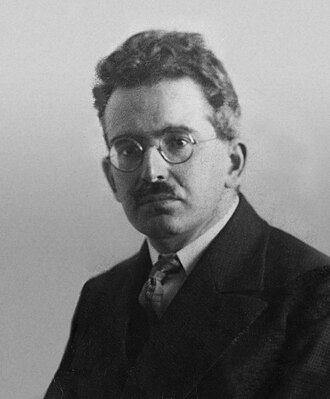
Born in Berlin in 1892, Walter Benjamin was one of the most original and unclassifiable figures of twentieth-century thought — philosopher, literary critic, translator, and essayist, peripherally linked to the Frankfurt School and a friend of Adorno. His academic career failed (his habilitation thesis was rejected), and he lived by his writing, always in difficulty. In 1940, fleeing the Nazis, he found himself blocked at the Franco-Spanish border, in Portbou, and took his own life — one of the most tragic fates of the European intelligentsia.
Blending Marxism, Jewish mysticism, and aesthetic sensibility, Benjamin produced concepts of enormous fertility. In the essay The Work of Art in the Age of Mechanical Reproduction (1935), he analyzes how photography and cinema dissolve the “aura” — that unique, ritual, unrepeatable presence of the original work of art. Technical reproduction democratizes art but also opens the way to the dangerous aestheticization of politics practiced by fascism.
His Theses on the Philosophy of History (1940) are a radical critique of the idea of progress. Inspired by a painting by Klee, Benjamin imagines the “angel of history,” dragged backward into the future while contemplating, in the past, a single catastrophe that never ceases to pile up ruins. History, he proposes, must be “brushed against the grain,” and each present moment (Jetztzeit) holds a potential for redemption. His reflections on the flâneur and urban modernity, gathered in the unfinished Arcades Project, made him central reading for cultural studies and contemporary aesthetic theory.
Key Concepts
- Aura: the quality of unique presence of the original work of art — linked to ritual, authenticity, and distance. “The Work of Art in the Age of Mechanical Reproduction” (1935)
- Technical reproducibility: photography and cinema destroy the aura, democratize art, but also open the way to the aestheticization of politics (fascism)
- Allegory vs. symbol: prefers allegory (fragment, ruin, melancholy) to the Hegelian symbol (harmonic totality)
- Theses on the Philosophy of History (1940): against progressivism; the angel of history (Angelus Novus) sees accumulated catastrophe in the past; history must be “brushed against the grain”
- Now-time (Jetztzeit): each moment contains the messianic potential for revolutionary redemption
- Flâneur: figure of the modern urban observer, a character from Baudelaire whom Benjamin analyzes as a symptom of capitalist modernity (Arcades Project)
Influenced by
- Marx — historical materialism (heterodox)
- Hegel — dialectics (critique and reinterpretation)
- Nietzsche — critique of linear history
- Gershom Scholem — Kabbalah and Jewish messianism
- Bertolt Brecht — political and epic art
Influenced
- Adorno — partnership and dispute over aesthetics
- Cultural studies (Stuart Hall)
- Postcolonial and memory theory
- Giorgio Agamben — state of exception and messianism
Works
The Origin of German Tragic Drama (1928); One-Way Street (1928); The Work of Art in the Age of Mechanical Reproduction (1935); The Arcades Project (posthumous, 1982); Theses on the Philosophy of History (1940).
See also
Twentieth Century Philosophy