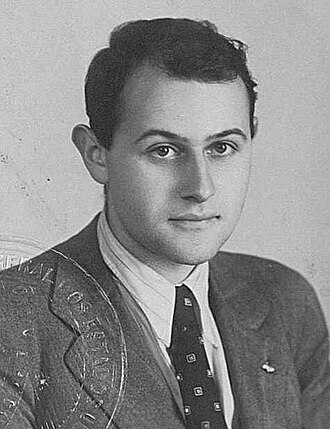
Vilém Flusser was born in Prague, then Czechoslovakia, on 12 May 1920, and died on 27 November 1991 in a car accident near the Czech–German border while traveling to give a lecture in Prague. Born into a Jewish family, he began his studies in Prague in 1938; with the Nazi occupation he left the city in 1939 for London and, in 1940, emigrated to Brazil, where he became a Brazilian citizen. A significant part of his family fell victim to Nazi persecution, an experience that marked his reflection on exile, language, and belonging.
Career
He lived in Brazil, mainly in São Paulo and Rio de Janeiro, from 1940 to 1972, working as an essayist, lecturer, and teacher. In those years he developed intellectually in close dialogue with Vicente Ferreira da Silva, his chief interlocutor, about whose work he wrote several essays and whose ontology shaped his view of reality. He published Língua e Realidade (1963), a work of philosophy of language in which he argues that reality is constituted in the languages that articulate it, along with other texts in Portuguese. In 1972 he left Brazil; he lived temporarily in Merano (South Tyrol) and, in 1981, settled in Robion, in southern France. He wrote in Portuguese, German, English, and French, and his archive is now the object of international study.
Key Concepts
- Apparatus and program — in Towards a Philosophy of Photography (Für eine Philosophie der Fotografie, 1983; Portuguese Filosofia da Caixa Preta), Flusser analyzes the photographic camera as the paradigm of the apparatus: an instrument that carries out a program foreseen by its makers. The photographer seems free but operates within the possibilities the apparatus offers.
- Functionary — the human being who operates the apparatus without mastering it; freedom, for Flusser, consists in playing against the apparatus’s program, producing information it did not foresee.
- Technical image — an image produced by apparatuses, themselves derived from scientific texts, which Flusser distinguishes from traditional images and which, in his view, inaugurates a new stage of culture after linear writing (the theme of Ins Universum der technischen Bilder, 1985).
- Post-history — the diagnosis, developed in Pós-história (1983), that contemporary culture is leaving the linear, historical thinking organized by writing for forms of consciousness structured by technical images and codes.
- Communicology — the project of a general theory of communication as the study of the ways human beings produce meaning; gathered in the posthumously published Kommunikologie.
- Philosophical fiction — in Vampyroteuthis infernalis (1987, with the artist Louis Bec), he uses the image of the abyssal mollusc as a speculative mirror of the human.
Influenced by
- Vicente Ferreira da Silva, the central interlocutor of his Brazilian period
- Martin Heidegger and the phenomenological tradition
- Reflection on language and reality in dialogue with twentieth-century philosophy of language
Influenced
- Media studies and the philosophy of technology, especially debates on photography, the technical image, and digital culture
- Communication theory and research in the arts and design in Europe and Latin America
- The Vilém Flusser Archive in Berlin and the continuing academic reception of his work
Works
Língua e Realidade (1963); Pós-história (1983); Für eine Philosophie der Fotografie (1983; Towards a Philosophy of Photography); Ins Universum der technischen Bilder (1985); Vampyroteuthis infernalis (1987, with Louis Bec); Writings (2002); Communicology (2023, English edition).
See also
Vicente Ferreira da Silva, Martin Heidegger, Jacques Ellul, Walter Benjamin