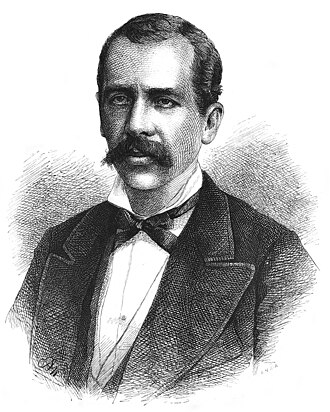
Tobias Barreto de Menezes (1839–1889), born in the province of Sergipe, was a jurist, philosopher, critic and poet, recognised as one of the central figures of the so-called Recife School. In a Brazilian intellectual landscape dominated by an eclecticism of spiritualist inspiration, Tobias Barreto championed the introduction of “Germanism”—that is, German culture, science and philosophy—as a renewing alternative to the prevailing thought of the time. He drew close to monism and evolutionism, engaging critically with authors such as Haeckel, and turned against the dominant spiritualism. His most enduring contribution lies in the philosophy of law, where he defended a conception of law as a cultural and historical phenomenon rather than as the expression of a natural order.
Key Concepts
- Germanism: an intellectual programme for introducing German philosophy and science into Brazil, in opposition to the French-inspired spiritualist eclecticism that dominated the academic environment of the Empire.
- Law as a product of culture: the central thesis of his legal philosophy, according to which law derives neither from nature nor from a metaphysical order but is a historical and cultural product arising from human social life.
- Critique of spiritualism: a rejection of the traditional spiritualist and metaphysical currents in favour of an approach closer to the natural sciences and to monist thought.
- Monism and evolutionism: an affinity with the monist and evolutionist conceptions of his time, in dialogue with the work of Ernst Haeckel, though without dogmatic adherence.
- Culture and civilisation: an emphasis on the role of culture as the horizon for understanding human phenomena, including law, morality and institutions.
Influenced by
- Ernst Haeckel — monism and evolutionism
- Nineteenth-century German philosophy and science — the source of “Germanism”
- The German legal debate on law as a historical and cultural phenomenon
Influenced
- The Recife School and its successors
- Sílvio Romero — disciple and propagator of his ideas
- Brazilian legal thought oriented towards sociology and the critique of natural law
- The reception of German philosophy in Brazil
Works
Among his writings are Ensaios e Estudos de Filosofia e Crítica, the Estudos de Direito, and Menores e Loucos, a work of legal philosophy addressing criminal imputability and responsibility. His output combines philosophical essays, legal studies and cultural criticism, characteristic of the pre-Republican period.
See also
Farias Brito Auguste Comte Ernst Haeckel