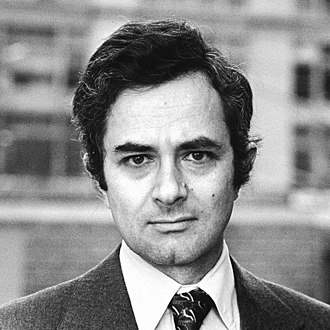
Thomas Nagel is one of the most respected contemporary philosophers working in philosophy of mind, ethics, and political philosophy. Born in 1937, he is a professor at New York University (NYU). His work returns obstinately to a single theme: the difficulty of reconciling the inner, subjective perspective of each conscious being with the external, impersonal, objective perspective that science and reason strive for. Known for his lucid prose and the intellectual honesty with which he exposes the limits of his own solutions, Nagel resists both easy reductions and mysticism, holding that certain philosophical problems are genuine and should not be dissolved prematurely.
Key Concepts
The subjective character of experience (“What Is It Like to Be a Bat?,” The Philosophical Review, 1974): in what is perhaps the most cited paper in twentieth-century philosophy of mind, Nagel argues that an organism has conscious states if and only if there is something it is like to be that organism — a subjective point of view. The bat, which perceives the world through echolocation, has an experience whose qualitative character is inaccessible to us: however much we know about its neurophysiology, we do not know what it is like to be a bat. The conclusion is that the subjective character of experience cannot be fully captured by any objective, physical description, which poses a deep obstacle for physicalist reductionism.
The subjective and the objective standpoints (The View from Nowhere, 1986): Nagel develops the central tension of his philosophy. We are able to step back progressively from our own point of view and conceive the world in increasingly impersonal terms — the “view from nowhere.” Yet there are aspects of reality, such as consciousness, value, and the meaning of one’s own life, that seem to exist only from within a point of view and that are lost when we try to objectify them completely. Reconciling these two standpoints, without suppressing either, is for Nagel one of the most fundamental philosophical problems.
Objective reasons for action (The Possibility of Altruism, 1970): Nagel argues that altruism is rationally grounded. Just as we recognize that our future interests give us reasons to act now, recognizing that we are merely “one person among others” should lead us to acknowledge objective reasons — reasons valid regardless of who considers them — that make the interests of others relevant to our deliberation. Egoism, on this reading, rests on an incoherence analogous to that of someone who disregards their own future.
Critique of neo-Darwinian reductionism (Mind and Cosmos, 2012): in a deliberately controversial and widely debated book, Nagel argues that the neo-Darwinian materialist conception of nature is “almost certainly false” as a complete explanation of the emergence of consciousness, cognition, and value. Without proposing a theistic alternative — Nagel describes himself as an atheist — he suggests that non-reductive, possibly teleological explanatory principles may be needed to account for how mind arises in the cosmos. The book met with strong resistance from many philosophers and scientists.
Ethics and political philosophy: in the essays collected in Mortal Questions (1979), Nagel treats topics such as death, moral luck, the absurd, and the conflicts between personal and impersonal obligations. In Equality and Partiality (1991), he examines the tension between the impartial demands of justice and the legitimate personal attachments of each individual, a recurring theme in his moral thought.
Influenced by
- The Cartesian and Kantian traditions on the relation between subject and object
- John Rawls — political theory and the question of impartiality
- The analytic debate over physicalism and functionalism
- Ludwig Wittgenstein — the limits of language and the expression of experience
Influenced
- David Chalmers and the debate over the “hard problem” of consciousness
- Contemporary discussions of qualia and consciousness
- Moral philosophy on moral luck, alongside Bernard Williams
- Debates in normative ethics and political philosophy
Works
The Possibility of Altruism (1970); Mortal Questions (1979); The View from Nowhere (1986); Equality and Partiality (1991); The Last Word (1997); Mind and Cosmos (2012). The article “What Is It Like to Be a Bat?” (1974) remains his most influential contribution.
See also
David Chalmers Bernard Williams John Searle