
Saul Aaron Kripke was arguably the most technically gifted analytic philosopher of his generation. Born in Omaha, Nebraska, he showed extraordinary aptitude from adolescence: he published his first mature logical article — a completeness proof for modal logic — at eighteen, and corresponded with professional logicians while still in high school. A professor at Princeton and later at the CUNY Graduate Center, Kripke transformed metaphysics, philosophy of language, and modal logic to such a degree that virtually all analytic philosophy after the debates surrounding Naming and Necessity is, in some sense, a response to him.
Key Concepts
Possible Worlds Semantics (Kripke Semantics): Between 1959 and 1963, while still an undergraduate at Harvard, Kripke published a series of technical articles — including “A Completeness Theorem in Modal Logic” (Journal of Symbolic Logic, 1959) — that established possible worlds semantics for modal logics. In this formal framework, necessary truths are truths in all possible worlds while contingent truths hold in some but not all, and it became the standard apparatus for modal semantics.
Rigid Designators (Naming and Necessity, lectures delivered at Princeton in 1970; published in Semantics of Natural Language, 1972; book edition, Harvard University Press, 1980): Kripke distinguishes rigid designators — terms that designate the same individual in every possible world — from accidental (non-rigid) designators, which may pick out different objects in different worlds. Proper names such as “Aristotle” or “Humphrey” are rigid designators: in any possible world in which we discuss Aristotle, we are talking about that very individual, regardless of what properties he would have in that world.
Critique of Descriptivism (Causal-Historical Theory of Reference): The dominant theory of proper names, associated with Frege and Russell, held that a name means a cluster of definite descriptions — “Aristotle” would mean something like “the teacher of Alexander who wrote the Metaphysics”. Kripke refuted this view with several arguments: it is possible that Aristotle should have had none of those properties (he might have died in infancy) and yet “Aristotle” would still refer to him. In its place, Kripke proposes a causal-historical theory: a name is introduced in an initial baptism, and reference is transmitted through a historical chain of uses, independent of any fixed cluster of descriptions.
A Posteriori Necessity and A Priori Contingency: Kripke dissolved the traditional identification between the necessary/contingent pair (metaphysical categories) and the a priori/a posteriori pair (epistemic categories). Statements such as “water is H₂O” or “heat is molecular motion” are necessary (there could be no water that was not H₂O), yet we know this only a posteriori — through scientific discovery. Conversely, “the standard metre is one metre long” is contingent (the platinum bar could have had a different length) but appears to be known a priori by whoever defined it as the standard. These distinctions deeply shook analytic metaphysics.
Essentialism: The theory of rigid designators leads naturally to essentialism: objects have essential properties that constitute them across all possible worlds. Kripke argues that the origin of an object is essential to it — it would be impossible for Queen Elizabeth II to have been born of different parents, for example. Likewise, the chemical composition of natural kinds (water, gold) is essential to them.
“Kripkenstein” — Wittgenstein on Rules and Private Language (Wittgenstein on Rules and Private Language, 1982): In this controversial book, Kripke presents a celebrated reading of Wittgenstein’s Philosophical Investigations. The sceptical paradox about rule-following — how can I know that in extending the concept of addition to new pairs I am following the same rule as before? — supposedly leads to a form of scepticism about meaning. Kripke’s “sceptical-communitarian” solution (attributed to Wittgenstein, but disputed by many commentators) is that meaning is a communal practice, not an individual fact. Whatever its fidelity to Wittgenstein, the argument generated enormous debate.
Influenced by
- Frege and Russell — logic and theory of reference (critical starting point)
- Carnap — formal modal semantics
- Wittgenstein — rule-following, semantic scepticism
- Leibniz — possible worlds as a conceptual tool
Influenced
- Hilary Putnam — semantic externalism (Twin Earth; parallel with rigid designators)
- David Chalmers — two-dimensional semantics and philosophy of mind
- Timothy Williamson — modality and metaphysics
- All of contemporary analytic metaphysics
- Philosophy of language and theory of reference
Works
“A Completeness Theorem in Modal Logic” (Journal of Symbolic Logic, 1959); Naming and Necessity (1972/1980); Wittgenstein on Rules and Private Language (1982); Reference and Existence (1973 lectures, published 2013).
See also
Analytic Philosophy Hilary Putnam David Chalmers
Recommended books:
 Naming and Necessity — Saul Kripke
Ver na Amazon →
Naming and Necessity — Saul Kripke
Ver na Amazon →
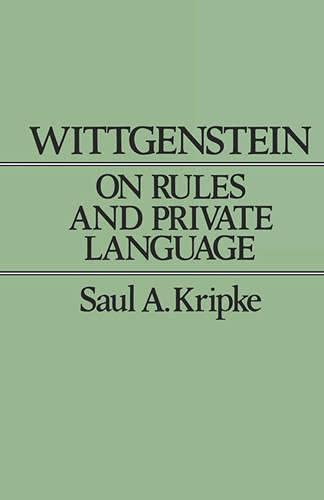 Wittgenstein on Rules and Private Language — Saul Kripke
Ver na Amazon →
Wittgenstein on Rules and Private Language — Saul Kripke
Ver na Amazon →