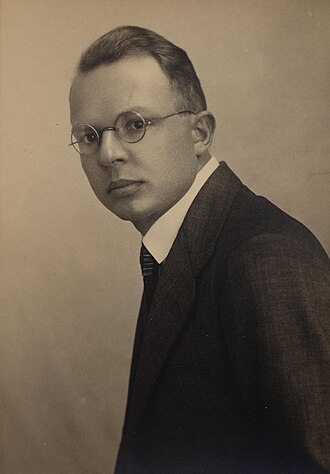
Rudolf Carnap was the most systematic and influential figure of the Vienna Circle and of logical empiricism, a movement that sought to refound philosophy on the rigor of modern logic and fidelity to experience. Trained in physics, logic, and philosophy in Germany, he studied with Gottlob Frege at Jena before joining the Vienna Circle in the 1920s. With the rise of Nazism he emigrated to the United States, where he taught at Chicago and at the University of California, Los Angeles. His work spans the logical construction of knowledge, the syntax and semantics of language, the theory of confirmation, and inductive logic, always guided by the ideal of conceptual clarity.
Key Concepts
The logical construction of the world (Der logische Aufbau der Welt, 1928): Carnap undertakes an ambitious project of constitution (Konstitution) — to show how all the concepts of knowledge can in principle be defined step by step from a base of elementary experiences, using the resources of logic. The work is a landmark of the program of reducing knowledge to empirical foundations articulated logically, even though Carnap himself would later soften its ambitions.
Verifiability and the critique of metaphysics (“Überwindung der Metaphysik durch logische Analyse der Sprache” / “The Elimination of Metaphysics through Logical Analysis of Language,” 1932): according to the empiricist criterion of meaning, a proposition has cognitive significance only if it is empirically verifiable (or, in later versions, confirmable) or if it is analytic/tautological. Applying this criterion, Carnap concludes that many metaphysical statements are neither true nor false but literally meaningless (sinnlos) — pseudo-propositions that merely express an attitude toward life without asserting anything about the world.
Logical syntax and the principle of tolerance (Logische Syntax der Sprache, 1934): Carnap proposes that philosophical questions be treated as questions about the logical syntax of languages. He formulates the famous principle of tolerance: there is no single “correct” logic imposed by reality; everyone is free to construct and adopt whatever linguistic framework they wish, provided they do so explicitly and coherently. Philosophy becomes, to a large extent, the task of proposing and comparing such frameworks — a kind of “conceptual engineering.”
Internal and external questions (“Empiricism, Semantics, and Ontology,” 1950): Carnap distinguishes two kinds of question about the existence of entities (numbers, classes, physical things). Internal questions are posed within an already adopted linguistic framework and have answers that are trivial or determined by the rules of the framework (for example, “are there prime numbers greater than one hundred?”). External questions — “do numbers really exist?” — purport to ask about the reality of the framework as a whole and, according to Carnap, are not theoretical questions with a truth value but practical questions about the expediency of adopting such a framework. With this distinction, Carnap seeks to dissolve many traditional ontological debates.
Confirmation and inductive logic: in his American period, Carnap devoted himself to developing a logical theory of confirmation and probability. He sought to define a degree of confirmation of a hypothesis by the evidence in logico-probabilistic terms, a project set out above all in Logical Foundations of Probability (1950).
The method of explication: Carnap proposes explication as a central philosophical task — replacing a vague, imprecise concept of ordinary language (the explicandum) with a more exact, fruitful, and simple concept (the explicatum) suited to theoretical purposes. It is an ideal of philosophical progress through conceptual clarification.
Influenced by
- Gottlob Frege — logic and the analysis of language, whose pupil he was at Jena
- Bertrand Russell — logicism and the method of logical analysis
- Ludwig Wittgenstein — the Tractatus and the idea of the limits of what can be said
- The empiricist tradition (Mach, Hume) and neo-positivism
Influenced
- W.V.O. Quine, who criticized him closely while retaining deep intellectual respect
- Twentieth-century philosophy of science (Hempel, Reichenbach, and logical empiricism)
- Formal semantics and the theory of confirmation
- Contemporary debates on ontology, metaontology, and “conceptual engineering”
Works
Der logische Aufbau der Welt (1928); Logische Syntax der Sprache (1934); Foundations of Logic and Mathematics (1939); Introduction to Semantics (1942); Meaning and Necessity (1947); Logical Foundations of Probability (1950). The essay “Empiricism, Semantics, and Ontology” was published in 1950.
See also
Gottlob Frege W.V.O. Quine Bertrand Russell