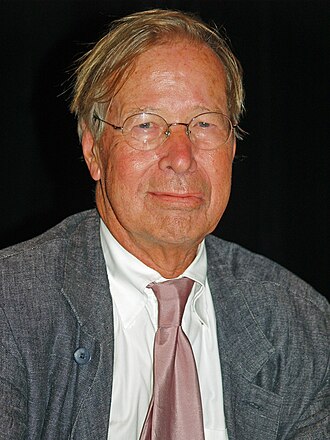
American legal and moral philosopher, professor at Yale, Oxford, and New York University; Dworkin’s work constitutes the most influential critique of legal positivism in the 20th century and a comprehensive normative theory integrating law, political morality, and ethics.
Key Concepts
- Principles vs. rules: against Hart, Dworkin argues that legal systems include not only rules (which apply in an all-or-nothing fashion) but also principles and policies. Principles such as “no one may profit from his own wrong” have weight and dimension; they do not derive from any rule of recognition — which shows that positivism is an insufficient descriptive theory of law
- Critique of discretion: Hart concedes that in “hard cases” judges exercise discretion, thereby creating new law. Dworkin rejects this: even in hard cases there is a right answer (the one right answer thesis) — the judge discovers existing law rather than creating it
- Rights as trumps: in Taking Rights Seriously (1977), individual rights are “trumps” that override arguments of collective utility or policy — no social goal can justify violating them. Dworkin defends an egalitarian liberalism grounded in equal concern and respect
- Law as integrity: in Law’s Empire (1986), law is neither a collection of brute facts (positivism) nor a list of natural values (natural law theory) but an interpretive practice. Law as integrity requires judges to treat the legal system as expressing a coherent set of moral principles
- Chain novel (chain novel): a metaphor for the interpretive process — the judge deciding a hard case is like a writer continuing a novel by many authors; he must be faithful to earlier chapters while making the work as good as it can be
- Judge Hercules: an ideal (not real) figure endowed with superhuman capacity to find the decision that best fits the system’s principles and renders it morally most coherent. The implicit normative claim: actual judicial decisions should approximate this ideal
- Equality of resources: in Sovereign Virtue (2000), just distribution requires that resources be divided so that no one envies another’s share, correcting disadvantages imposed by brute luck (illness, disability) while respecting personal choices
- Unity of value: in Justice for Hedgehogs (2011) — the title evoking Isaiah Berlin’s hedgehog that knows “one big thing” — Dworkin argues that ethical and moral values form a coherent system: living well and treating others justly are not competing demands but mutually dependent ones
- Religion without God: Religion without God (2013, posthumous) extends the unity-of-value thesis to a secular religious attitude that recognises intrinsic value and beauty in the universe without presupposing a personal God
Influenced by
- H.L.A. Hart — the positivism Dworkin critiques in depth
- Lon Fuller — “inner morality of law” and the integrative function of principles
- John Rawls — egalitarian liberalism, debates on equality
- Isaiah Berlin, Kant, and the American liberal tradition
Influenced
- The whole of contemporary legal philosophy (mandatory point of reference)
- Carlos Nino, Robert Alexy, and debates on the balancing of principles
- American and European constitutional adjudication
- Debates on judicial review and constitutional interpretation
Works
Taking Rights Seriously (1977); A Matter of Principle (1985); Law’s Empire (1986); Life’s Dominion (1993); Freedom’s Law (1996); Sovereign Virtue (2000); Justice in Robes (2006); Is Democracy Possible Here? (2006); Justice for Hedgehogs (2011); Religion without God (2013, posthumous).
See also
Twentieth-Century Philosophy · H.L.A. Hart · John Rawls · Lon Fuller