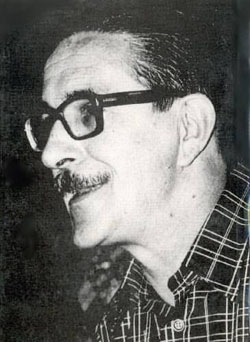
Born in Buenos Aires in 1922, into a family of German origin, Rodolfo Kusch united philosophy and anthropology in a rare way: instead of thinking America from European books, he traveled through northwestern Argentina and the Bolivian highlands in extensive fieldwork, listening to Quechua and Aymara thought. From this experience arose a radical question: is European ontology really capable of comprehending the greater part of human experience?
His answer turns on a distinction that Spanish — and Portuguese — allow with singular clarity: that between being (ser) and dwelling (estar). “Being” expresses the modern Western mode: to be something, to produce, to assert oneself, to project oneself. “Dwelling” expresses another way of inhabiting the world: to be here, rooted in the land, in the community, in the here-and-now — the mode proper to the human being of deep America. For Kusch these are two distinct and irreducible ontologies.
Hence his concept of “deep America” (1962): beneath the “superficial,” Europeanized, urban America, there persists an indigenous and popular America that is not a mere pre-modern residue but an alternative and legitimate form of existence. Indigenous thought, far from being “proto-rational,” is differently rational, with its own philosophical coherence. A critic of Eurocentrism and a defender of a philosophy rooted in territory (his “geoculture”), Kusch influenced Enrique Dussel and the decolonial studies of Walter Mignolo.
Key Concepts
- Being vs. dwelling (América profunda, 1962): “being” (being-something, productive, modern European) vs. “dwelling” (being-here, rooted, communal, land-bound) — two distinct and irreducible ontological modes
- Deep America: the America of indigenous and popular traditions persists beneath the Europeanized “superficial America”; it is not a pre-modern residue but an alternative way of inhabiting the world
- Cultural phagocytosis: strategy of cultural survival — absorption of European elements and transformation from within, maintaining deep pre-Columbian structures of thought
- Indigenous thought as philosophy (El pensamiento indígena y popular en América, 1970): Andean thought is not proto-rational but differently rational — possessing its own internal philosophical coherence
- Geoculture: all thought is rooted in a specific territory; “popular knowledge” is legitimate philosophical knowledge
Influenced by
- Husserl and Heidegger — phenomenology (especially Dasein as “being-there”)
- Ludwig Binswanger — existential analysis
- C.G. Jung — collective unconscious
- Oswald Spengler — morphology of cultures
- Quechua and Aymara thought — direct fieldwork access
Influenced
- Enrique Dussel — exteriority and critique of European ontology
- Walter Mignolo — colonial difference and other epistemologies
- Studies of indigenous philosophy in Argentina, Bolivia, and Peru
Works
La seducción de la barbarie (1953); América profunda (1962); El pensamiento indígena y popular en América (1970); La negación en el pensamiento popular (1975); Geocultura del hombre americano (1976); Esbozo de una antropología filosófica americana (1978); Obras completas (4 vols., posthumous, 2000).
See also
Latin American Philosophy Enrique Dussel Heidegger