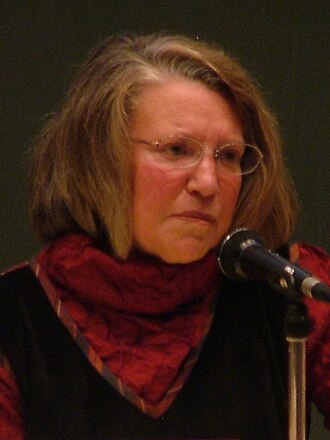
Nancy Fraser (b. 20 May 1947, Baltimore) is an American critical theorist and feminist philosopher, the Henry A. and Louise Loeb Professor Emerita at The New School for Social Research in New York. An heir to the Frankfurt School tradition, she is one of the most influential voices in contemporary critical theory. Her most celebrated contribution was to reframe the question of justice around the tension between redistribution (the economic dimension) and recognition (the cultural dimension), warning of the risk that struggles for identity and visibility might eclipse struggles for material equality. In recent decades she has broadened that diagnosis into a sweeping critique of capitalism and its relations to feminism, ecology, and democracy.
Key Concepts
- Redistribution and recognition (From Redistribution to Recognition?, 1995; Justice Interruptus, 1997): justice has two irreducible dimensions — economic maldistribution (class) and cultural misrecognition (status). To reduce one to the other is a mistake: not every economic injustice is cured by recognition, nor every cultural injustice by redistribution. The challenge is to articulate the two without subordinating either.
- Participatory parity and the status model: against the “identity model” of recognition (which Fraser attributes to Charles Taylor and Axel Honneth, and which risks reifying group identities), she proposes a status model: what is claimed is not respect for an identity but the removal of the institutional obstacles that prevent certain subjects from participating as peers in social life. The regulative norm is participatory parity. This was the core of her public debate with Honneth (Redistribution or Recognition?, 2003).
- Subaltern counterpublics (Rethinking the Public Sphere, 1990): in critical dialogue with Habermas, Fraser shows that the idealized bourgeois public sphere was never inclusive; subordinate groups form counterpublics — parallel arenas in which they elaborate alternative interpretations of their identities and interests.
- The three dimensions of justice and the problem of framing (Scales of Justice, 2008): to redistribution (economic) and recognition (cultural), Fraser adds representation (political). And she raises the question of the “who” of justice: in a global era, deciding who counts as a subject of justice is itself a political act — hence her critique of the “Westphalian frame” that confines justice within the borders of the nation-state.
- Feminism and neoliberalism (Fortunes of Feminism, 2013): in a bracing self-criticism, Fraser argues that second-wave feminism, by shifting its focus from the critique of political economy to identity politics, was partly captured by neoliberalism, becoming its unwitting “handmaiden.” Hence her later critique of “progressive neoliberalism.”
- Cannibal capitalism (Cannibal Capitalism, 2022): in dialogue with Marx and Karl Polanyi, Fraser holds that capitalism devours the very conditions it depends on — care work and social reproduction, nature, and political power — generating crises that are not only economic but also crises of care, ecology, and democracy.
Influenced by
- Habermas — the public sphere and critical theory (in critical dialogue)
- Karl Marx — the critique of political economy
- Karl Polanyi — the “double movement” and the limits of the market
- The Frankfurt School — social theory with an emancipatory intent
- Feminist theory of the 1970s–80s
Influenced
- Contemporary feminist theory
- Debates on justice, recognition, and redistribution
- The theory of global and transnational justice
- The contemporary critique of capitalism and the crisis of care
Works
Unruly Practices (1989); Justice Interruptus (1997); Redistribution or Recognition? A Political-Philosophical Exchange (with Axel Honneth, 2003); Scales of Justice (2008); Fortunes of Feminism (2013); Feminism for the 99% (manifesto, with Cinzia Arruzza and Tithi Bhattacharya, 2019); Cannibal Capitalism (2022). She is also known for her debate with Judith Butler on the boundary between the “cultural” and the “economic” (1997–98).
See also
Iris Marion Young, Habermas