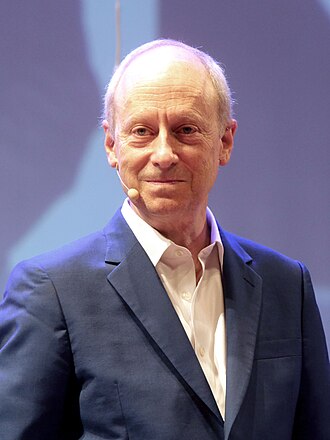
Michael Sandel (b. 1953, Minneapolis) is an American political philosopher and professor of government at Harvard since 1980, known both for the rigour of his philosophical critique of Rawlsian liberalism and for the enormous public reach of his course “Justice”, one of the most popular classes in Harvard’s history. Sandel is a central figure in the so-called liberal–communitarian debate of the 1980s, although he himself resists the label. His doctoral thesis, published as Liberalism and the Limits of Justice (1982), offered one of the sharpest philosophical critiques of John Rawls’s A Theory of Justice. In the following decades he broadened his scope to the critique of the commodification of social life and of meritocratic ideology.
Key Concepts
- The unencumbered self (Liberalism and the Limits of Justice, 1982): the hypothetical subject of Rawls’s “original position” — abstracted from its ties, traditions, and constitutive ends — is, for Sandel, an incoherent philosophical fiction: such a self, stripped of all identity content, could neither choose nor recognise genuine moral obligations.
- Constitutive ends (Liberalism and the Limits of Justice, 1982): much of our moral obligation is not voluntarily chosen but follows from constitutive identities — we are sons and daughters, citizens, members of religious communities, heirs of a tradition — and any theory of justice that ignores this background distorts moral experience.
- Republic of citizens vs. procedural republic (Democracy’s Discontent, 1996): the American republican tradition, which presupposed citizens cultivated in civic virtues, has been displaced by a “procedural republic” neutral among conceptions of the good; this displacement explains, in part, contemporary democratic discontent.
- Moral limits of markets (What Money Can’t Buy, 2012): there are goods whose nature is degraded when subjected to market logic — friendship, school awards, organs, military service —; the expansion of the market is therefore a moral question, not merely an economic one.
- Tyranny of merit (The Tyranny of Merit, 2020): the rhetoric of meritocracy, by feeding the illusion that winners fully deserve their success and losers their failure, corrodes democratic solidarity and produces social humiliation — one of the engines of contemporary populism.
- Public philosophy (his career as a whole): against hermetic specialisation, Sandel defends and practises a philosophy that addresses the public square and starts from concrete dilemmas — commercial surrogacy, racial preferences, ticket scalping, executive pay — in order to provoke moral debate among citizens.
Influenced by
- Aristotle — teleology, virtue, politics as ethics
- Hegel — communal Sittlichkeit against abstract moralism
- Alasdair MacIntyre — critique of the Enlightenment project and virtue ethics
- Charles Taylor — the situated self and communitarianism
- John Rawls — his privileged critical interlocutor
Influenced
- Contemporary debates on meritocracy, populism, and inequality
- Philosophical critique of market expansion (debates on commodification)
- Renewal of republican political philosophy in the United States
- Public philosophy and the teaching of philosophy to large audiences
- Will Kymlicka — critical dialogue on liberalism and community
Works
Liberalism and the Limits of Justice (1982) — his Harvard doctoral thesis, later revised — remains the obligatory reference for the communitarian critique of Rawls. Democracy’s Discontent: America in Search of a Public Philosophy (1996) historicises the argument, recovering the American republican tradition. Public Philosophy: Essays on Morality in Politics (2005) gathers public interventions. Justice: What’s the Right Thing to Do? (2009) is the book version of his famous course. What Money Can’t Buy: The Moral Limits of Markets (2012) examines the expansion of market rationality. The Tyranny of Merit: What’s Become of the Common Good? (2020) is his most recent diagnosis of the pathologies of meritocracy.
See also
Alasdair MacIntyre, Charles Taylor, John Rawls