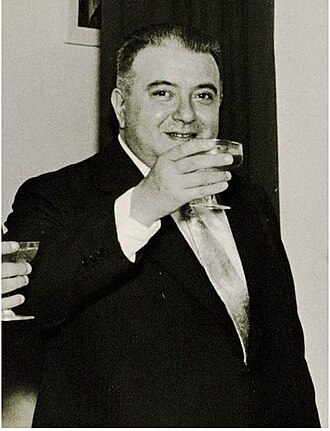
Mário Ferreira dos Santos was the most prolific Brazilian philosopher of the 20th century, author of more than fifty works seeking to build a comprehensive philosophical system — known as Concrete Philosophy — synthesising the classical Western tradition (especially Pythagoreanism, Aristotle, and Scholasticism) with original contributions in ontology, mathematics, symbolism, and theory of knowledge.
Key Concepts
Concrete Philosophy: The name Ferreira dos Santos gave to his systematic project. It stands opposed both to the abstract logicism of the analytic tradition and to existentialist subjectivism. The “concrete” is reality considered in the fullness of its determinations — neither raw empirical data nor pure abstraction, but the dialectical synthesis of both.
Tension of Tensionals (Tensão dos Tensionais): The central concept of Ferreira dos Santos’s ontology. Reality is structured by tensions (tensionais) that dynamise each other without cancelling each other out. Every being is a composition of opposites in dynamic tension — echoing dialectics and Pythagoreanism. This tension is not logical contradiction but the constitutive dynamic principle of the real.
Concrete Universal: Influenced by Hegel, but in an original way: the universal is neither merely abstract (valid for all but emptied of content) nor merely particular (singular and unrepeatable). The concrete universal preserves the richness of individual determinations while revealing the common ontological structure.
Mathematics and Ontology: Ferreira dos Santos sees in mathematics — especially number theory and Pythagorean proportion — a key to understanding the structure of the real. The relation between unity and multiplicity, finite and infinite, is addressed both mathematically and ontologically in works such as Tratado de Simbólica and Filosofia e Cosmovisão.
Encyclopaedia of Philosophical and Social Sciences: A multi-volume encyclopaedic project encompassing logic, ontology, epistemology, philosophy of nature, philosophy of culture, sociology, and philosophical psychology. A testament to the author’s systematic ambition.
Influenced by
- Aristotle — theory of being, substance, act and potency
- Plato — theory of forms, dialectics
- Pythagoras — mathematical structure of reality (an unusual but central source for Ferreira dos Santos)
- Thomas Aquinas — scholastic synthesis and analogical method
- Hegel — dialectics and concrete universal (incorporated critically)
- Pythagorean-Platonic and Brazilian neo-scholastic tradition
Influenced
- Brazilian Catholic philosophical tradition of the 20th century
Works
Filosofia e Cosmovisão (1955); Tratado de Simbólica (1955); Tratado de Ontologia (1955); Filosofia Concreta (series, multiple volumes); Enciclopédia das Ciências Filosóficas e Sociais (series, multiple volumes); Pitágoras e o Tema do Número (1953); Lógica e Dialética (1959); Metafísica dos Contrários (1972, posthumous).
See also
Twentieth-Century Philosophy Medieval Philosophy