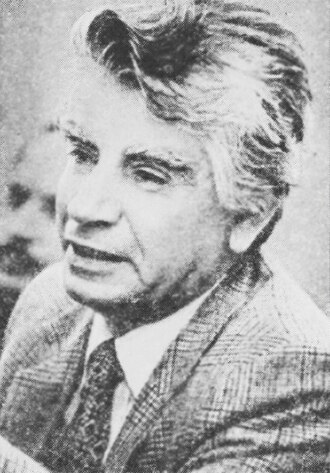
Born in Mexico City in 1912, Leopoldo Zea was a disciple of José Gaos — the exiled Spanish philosopher who brought the legacy of Ortega y Gasset to Mexico. Zea became the foremost historian of Latin American philosophy and the central figure in a decisive debate: is there a properly Latin American philosophy, or does the region merely repeat European thought?
His answer is affirmative and liberating. Inheriting from Ortega the idea that we always think from a circumstance (“I am myself and my circumstance”), Zea argues that the American philosopher must depart from his or her own concrete historical situation — without an inferiority complex and without awaiting European validation. Hence his motto: Latin American philosophy is “philosophy, nothing more” (filosofía sin más), as legitimate as any other, with no need for adjectives that would relegate it to a lesser status.
Applying the historical method with rigor, Zea analyzed how European currents — the positivism of Auguste Comte, for example — were transformed by the concrete conditions of America. In America in History (1957), he held that Latin America was always a constitutive part of Western history, not its exterior. In his debate with Augusto Salazar Bondy, who deemed a philosophy produced in dependency “inauthentic,” Zea replied that it need not wait for political liberation to exist. His work prepared the ground for the Liberation Philosophy of Enrique Dussel.
Key Concepts
- Philosophy of circumstance: inheriting Ortega’s perspectivism (“I am myself and my circumstance”), argues that the American philosopher must depart from his or her concrete historical situation
- American historicism: rigorous application of the historical method to Latin American thought — “American” positivism is Comte transformed by local conditions
- America in history (1957): Latin America was always a constitutive part of Western history, not its exterior
- Philosophy without adjectives (La filosofía americana como filosofía sin más, 1969): against Salazar Bondy, argues that American philosophy is as legitimate as any other — it need not wait for political liberation to be authentic
- Identity and barbarism: in mature works, reinterprets the colonial category of “barbarian” as difference irreducible to Eurocentrism
Influenced by
- Ortega y Gasset — vital reason and perspectivism
- José Gaos — transmitter of Ortega in Mexico
- Wilhelm Dilthey — German historicism
- Auguste Comte — positivism (as critical object of analysis)
- Samuel Ramos — reflection on Mexican identity
Influenced
- Enrique Dussel — authenticity debate
- Augusto Salazar Bondy (by opposition)
- Horacio Cerutti Guldberg — philosophical historiography
- Comparative philosophy in Latin America
Works
El positivismo en México (1943); Dos etapas del pensamiento en Hispanoamérica (1949); América en la historia (1957); La filosofía americana como filosofía sin más (1969); Filosofía de la historia americana (1978); Discurso desde la marginación y la barbarie (1990).
See also
Latin American Philosophy Enrique Dussel Mariategui