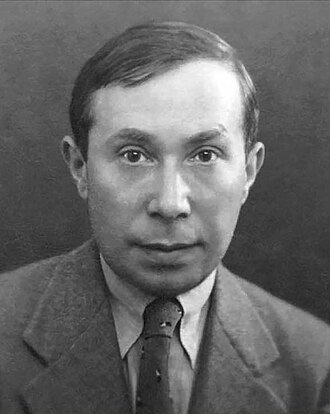
Leo Strauss was born in Kirchhain, Hesse, Germany, on 20 September 1899 to a Jewish family and died in Annapolis, Maryland, on 18 October 1973. He took his doctorate at Hamburg in 1921 under Ernst Cassirer, worked at the Academy for Jewish Research in Berlin, and, with the rise of Nazism, left Germany in 1932 on a Rockefeller fellowship, passing through Paris and England before settling in the United States. He taught at the New School for Social Research (1938–1949) and the University of Chicago (1949–1968), ending his career at Claremont Men’s College and St. John’s College in Annapolis.
Strauss advocated a return to the careful study of the classics of political philosophy, from Plato and Xenophon to Maimonides, Farabi, and Machiavelli, read with attention to literary form. His central question is what he called the “theologico-political problem,” the tension between philosophy’s claim to rational truth and the demand for obedience made by the city and by revelation, symbolized in the formula “Athens and Jerusalem.”
Key Concepts
- Esoteric writing — in Persecution and the Art of Writing (1952), Strauss maintains that, in contexts of persecution, philosophical authors arranged their most heterodox theses so as to be perceived only by careful readers, through deliberate contradictions, omissions, and the arrangement of the text; reading requires attention to this distinction between exoteric and esoteric meaning.
- Classical vs. modern natural right — in Natural Right and History (1953), based on the Walgreen Lectures at Chicago, he contrasts classical natural right (based on ends) with the modern natural right of Hobbes and Locke (based on individual rights), and criticizes historicism and the positivist fact-value distinction, which he identifies with Max Weber.
- Crisis of modernity and the “three waves” — political modernity advanced in phases associated with Machiavelli and Hobbes, with Rousseau and German idealism, and with Nietzsche, with a growing relativization of standards of the good.
- Athens and Jerusalem — the irreducible tension between philosophy and revelation as the source of the vitality of Western civilization.
- Political philosophy as inquiry into the best regime — the question of the best regime and the common good remains, for Strauss, the central question, not a mere object of historical study.
Reception and Criticism
The thesis of esoteric writing is contested by scholars who find it hard to falsify, since it allows one to read as esoteric what the text does not openly assert. Strauss’s critique of historicism and his defense of natural right are challenged by defenders of positivism and historicism. The political reception of Strauss has been controversial: Shadia Drury and others interpreted him as a mentor of American conservative currents, while scholars such as Catherine and Michael Zuckert reject that reading and consider it a caricature of his writings. The philosopher’s work should be kept distinct from the later association of his name with contemporary political debates.
Influenced by
- Plato, Xenophon, Farabi, and Maimonides — the reading of classical and medieval political philosophy
- Nietzsche and Heidegger — the diagnosis of the crisis of modernity and the radicalness of the problem of historicism; Strauss attended Heidegger’s courses
- Carl Schmitt — in 1932 Strauss wrote critical remarks on The Concept of the Political which, according to part of the commentators, influenced Schmitt’s revision of the text
- Hobbes — subject of his study The Political Philosophy of Hobbes (1936)
Influenced
- Students and commentators such as Allan Bloom, Harry Jaffa, and Seth Benardete
- The debate on natural right, historicism, and esotericism in political theory
- Exchanges with Alexandre Kojève in On Tyranny (1948) and with Eric Voegelin in an extensive correspondence
Works
Spinoza’s Critique of Religion (1930); Philosophie und Gesetz (1935); The Political Philosophy of Hobbes (1936); On Tyranny (1948); Persecution and the Art of Writing (1952); Natural Right and History (1953); Thoughts on Machiavelli (1958); What Is Political Philosophy? (1959); The City and Man (1964); Liberalism Ancient and Modern (1968).
See also
Plato, Carl Schmitt, Eric Voegelin, Hannah Arendt, Edmund Burke, Hobbes