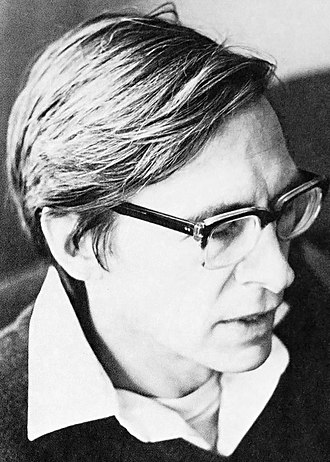
American political philosopher; A Theory of Justice (1971) relaunched normative political philosophy after decades of dominance by positivism and utilitarianism. The most influential work of 20th-century political philosophy.
A professor at Harvard for most of his career, Rawls wrote at a time when many regarded political philosophy as dead, reduced to conceptual analysis or to a history of doctrines. His central problem was to find a conception of justice for the basic institutions of society — the constitution, the economy, the family — that could be accepted by free and equal citizens without appealing to a single comprehensive worldview. Against the dominant utilitarianism, which was willing to sacrifice the well-being of some for the sake of the aggregate sum, Rawls insisted that each person possesses an inviolability founded on justice that even the general welfare cannot override. To articulate this intuition he revived the contractualist tradition of Locke, Rousseau, and Kant, but at a higher level of abstraction: the agreement is not about a concrete government, but about the very principles that should govern the basic structure.
Rawls’s method combines the thought experiment of the original position with what he calls reflective equilibrium — the mutual adjustment between general principles and our considered moral judgments until coherence is reached. In Political Liberalism (1993), recognizing that his theory had assumed too much about the moral unity of a society, he shifted the focus to the problem of stability under conditions of reasonable pluralism: how can a just society endure when its citizens hold deeply divergent religious, moral, and philosophical doctrines? His answer — an overlapping consensus around a political rather than metaphysical conception of justice — became as influential as the original theory. With The Law of Peoples (1999) he extended the reflection to the international plane. Even his best-known critics, from the libertarian Nozick to the communitarians, defined their positions by contrast with Rawls, confirming his place as the inescapable point of reference for contemporary political thought.
Key Concepts
- Veil of ignorance (veil of ignorance): to determine principles of justice, imagine an “original position” where the parties do not know their place in society (class, race, gender, talents) — the veil ensures impartiality
- Original position: hypothetical contractualist thought experiment — what principles would rational agents choose behind the veil? An update of Kant and Rousseau against utilitarianism
- Two principles of justice:
- Principle of liberty: each person has an equal right to basic liberties compatible with the same liberties for all
- Difference principle: socioeconomic inequalities are just only if: a) connected to offices open to all and b) benefit the least advantaged members of society
- Lexical priority: the principle of liberty takes precedence over the difference principle — liberty is not sacrificed for economic gain
- Justice as fairness (Justice as Fairness): society as a system of fair cooperation among free and equal persons
- Political liberalism (Political Liberalism, 1993): revision — the principles of justice need not rest on a comprehensive philosophical foundation, but on “overlapping consensus” among different reasonable doctrines in a pluralistic democracy
Influenced by
- Kant — practical reason, autonomy, categorical imperative
- Rousseau — social contract and general will
- Locke — natural rights and limited government
- John Stuart Mill — liberalism (but criticizes utilitarianism)
Influenced
- The whole of contemporary political philosophy (mandatory point of reference)
- Robert Nozick — Anarchy, State, and Utopia (libertarian critique of Rawls)
- Habermas — Rawls-Habermas debate on public reason
- Theory of international law and global justice
Works
A Theory of Justice (1971); Political Liberalism (1993); The Law of Peoples (1999); Justice as Fairness: A Restatement (2001).
See also
Twentieth-Century Philosophy