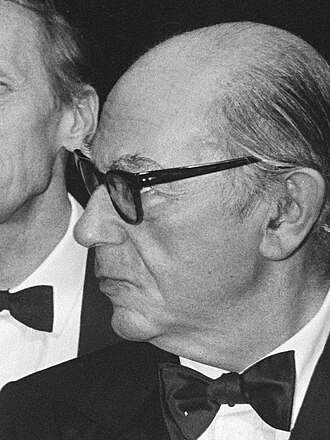
Latvian-British political philosopher and historian of ideas, one of the greatest liberal thinkers of the 20th century. Famous for the distinction between negative and positive liberty, and for his defense of value pluralism against all forms of political utopianism.
Born in Riga in 1909, in what was then the Russian Empire, Berlin witnessed the 1917 revolutions in Petrograd — where his family had moved in 1916 — before they returned to Riga and emigrated to England in 1921 — an experience that left a lasting mark on his distrust of promises of collective redemption. Educated and later a professor at Oxford, where he held the Chichele Chair of Social and Political Theory, he devoted himself less to building a system than to the history of ideas, recovering forgotten voices and countercurrents of modern thought. It was in this spirit that he delivered, in 1958, the celebrated inaugural lecture “Two Concepts of Liberty,” a text that organized the postwar political debate by showing that liberty understood as self-mastery (positive) could, taken to its extreme, license coercion in the name of the citizen’s “true self.”
At the heart of his work lies the rejection of monism — the belief that every genuine question has a single true answer and that these answers form a harmonious whole. For Berlin, on the contrary, human ends are plural, equally legitimate, and sometimes irreconcilable: choosing liberty may cost equality, justice may clash with mercy, without reason being able to rank them once and for all. This intuition, which he illustrated in the essay “The Hedgehog and the Fox” (1953) by distinguishing minds driven by a single vision (the hedgehog) from those that embrace multiplicity (the fox), made value pluralism his most influential contribution. From it flow both his critique of political utopias and his lasting impact on contemporary liberalism and normative political theory.
Key Concepts
- Negative liberty: the absence of external interference — I am free when no one prevents me from acting. It is freedom from (from obstacles, coercion, interference). Berlin associates it with classical liberalism
- Positive liberty: the capacity for self-governance, to be one’s own master and realize one’s potential. It is freedom to (for autonomy, for self-realization). Berlin warns that it can be distorted to justify paternalism or authoritarianism
- Value pluralism: fundamental human values (liberty, equality, justice, fraternity) are objectively real but incommensurable — they cannot be reduced to a single hierarchy without destroying something genuine. Against all moral monism
- Critique of utopianism: any doctrine claiming to have found the final solution to human problems (Marxism, extreme Enlightenment rationalism) tends toward totalitarianism — the pursuit of perfection is the enemy of liberty
- Counter-Enlightenment: a tradition of thinkers (Vico, Hamann, Herder) who criticized the universalist reason of the Enlightenment and valued particularity, history, and culture
- Two concepts of liberty: seminal essay (1958) that structured the liberal-communitarian debate for decades
Influenced by
- Locke, Hume, Mill — British liberal tradition
- Kant — autonomy and dignity
- Herder and Vico — cultural pluralism and historicity
- Machiavelli — incompatibility of political values
Influenced
- John Rawls — debate on liberty and justice
- Communitarianism (Taylor, Walzer, MacIntyre — against Berlin)
- Contemporary liberalism and normative political theory
Works
Four Essays on Liberty (1969); Vico and Herder (1976); The Crooked Timber of Humanity (1990); The Sense of Reality (1996).
See also
Twentieth-Century Philosophy
Recommended Books:
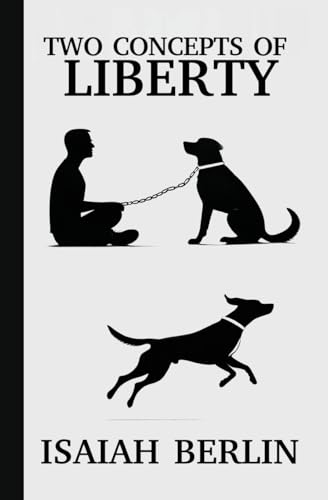 Two Concepts of Liberty / Freedom: Positive Liberty vs. Negative Liberty: Clash of Libertarian and Socialist Economies
Ver na Amazon →
Two Concepts of Liberty / Freedom: Positive Liberty vs. Negative Liberty: Clash of Libertarian and Socialist Economies
Ver na Amazon →
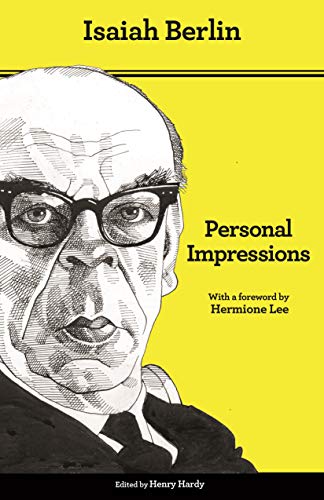 Personal Impressions: Updated Edition
Ver na Amazon →
Personal Impressions: Updated Edition
Ver na Amazon →