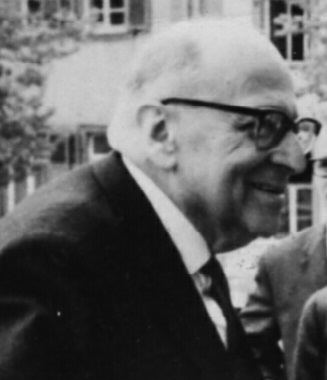
Born in Stuttgart in 1895, Max Horkheimer was the organizing soul of the Frankfurt School: in 1930 he took over the directorship of the Institute for Social Research and gathered around him thinkers such as Adorno, Marcuse, and Walter Benjamin. A Jew and a Marxist, he went into exile in the United States during Nazism and, after the war, returned to Frankfurt, where he served as rector. He died in 1973.
It was Horkheimer who defined the program of Critical Theory, in a 1937 essay. He distinguishes traditional theory — descriptive, specialized, accepting the world as given — from critical theory, which knows itself to be part of the society it studies, refuses to separate fact from value, and is oriented toward human emancipation. Theory here is not neutral contemplation but an instrument of transformation.
His most influential diagnosis, developed in part with Adorno, is that of instrumental reason. Modern reason, which had promised enlightenment, is said to have been reduced to pure calculation of efficient means, forgetting the question of ends and of what is just — a “reason” that serves science and domination equally. In Eclipse of Reason (1947), Horkheimer shows how this degradation prepares the ground for authoritarianism. In his maturity, disbelieving in revolution, he turned toward a melancholy, almost theological hope that injustice might not have the last word. His work shaped Adorno and opened the way to Habermas.
Key Concepts
- Critical Theory (1937): distinguishes traditional theory (descriptive, specialized) from critical theory (reflexive, totalist, oriented toward human emancipation)
- Instrumental Reason (Eclipse of Reason, 1947): objective reason (which orients ends, determines what is good) was eclipsed by instrumental reason (which calculates only efficient means). “The sickness of reason was born from the necessity to dominate nature”
- Fascism as truth of modernity: “Fascism is the truth of modern society” — reveals what capitalism hides
- Late phase: disbelief in revolution; theological hope — injustice must not have the last word
Influenced by
- Marx — critique of capitalism (but surpasses dogmatic Marxism)
- Hegel — totality and dialectics
- Freud — the unconscious and repression
Influenced
- Adorno (central collaborator)
- Habermas — 2nd generation of the Frankfurt School
Works
Eclipse of Reason (1947); Dialectic of Enlightenment (1947, with Adorno); Critical Theory (essays, 1968).
See also
Twentieth Century Philosophy