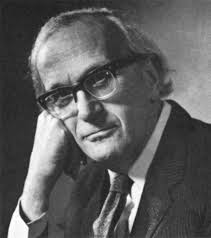
British legal philosopher, Professor of Jurisprudence at Oxford (1952–1968); The Concept of Law (1961) is the most influential work of 20th-century legal positivism and reshaped the terms of debate over the nature, validity, and bindingness of law.
Key Concepts
- Primary and secondary rules: the central distinction of The Concept of Law. Primary rules impose duties of conduct (do not kill, keep contracts). Secondary rules are meta-rules about primary rules, subdivided into: (a) the rule of recognition — the criterion that identifies which norms belong to the legal system; (b) rules of change — procedures for creating, altering, and repealing primary rules; (c) rules of adjudication — confer authority on officials to settle disputes
- Rule of recognition: the norm that defines the criteria of legal validity in a given system — it is not itself valid or invalid but exists as a social fact, accepted by officials from an “internal point of view.” It answers “what is law?” without appealing to morality
- Internal point of view: whoever accepts a rule as a standard of conduct and criticism — not merely from fear of sanctions — adopts the internal point of view. Understanding law requires grasping this standpoint, not merely describing external behaviour (as Austinian behaviourism did)
- Open texture: general language inevitably has clear cases of application and a penumbra of uncertainty where the norm does not determine the outcome. In hard cases judges exercise discretion — they choose, within limits, which interpretation to adopt. Hart denies that law always has a ready-made answer (the criticism Dworkin will level against him)
- Conceptual separation of law and morality: unlike natural law theory, the legal validity of a norm depends on formal criteria (membership in the system), not on its moral content. An unjust norm may be valid; a morally correct norm may not be law. This does not imply that law ought not to be criticised morally — only that such criticism operates on a distinct plane
- Minimum content of natural law: despite the separation, Hart concedes that any legal system that aspires to survival must incorporate a nucleus of norms (protection of life, property, keeping of promises) imposed by the contingencies of human nature — the “minimum content of natural law”
- Hart–Fuller debate (1958): in the Harvard Law Review, Hart and Lon Fuller conducted the most celebrated exchange in 20th-century anglophone legal philosophy. Against Fuller’s thesis that law has an “inner morality,” Hart insists that validity and morality are conceptually distinct
Influenced by
- Jeremy Bentham — precursor of legal positivism, critic of natural law
- John Austin — command theory and the notion of law as the sovereign’s command (Hart critiques and supersedes Austin)
- Ludwig Wittgenstein — philosophy of language, meaning as use, open texture
- J.L. Austin — Oxford ordinary-language philosophy
- Hans Kelsen — normativist positivism (Hart engages critically with the Grundnorm)
Influenced
- Ronald Dworkin — Taking Rights Seriously (1977) and Law’s Empire (1986) are the principal philosophical response to Hart
- Joseph Raz — The Concept of a Legal System (1970) and the authority thesis
- Neil MacCormick — institutional positivism
- The entire tradition of anglophone analytical jurisprudence
Works
Causation in the Law (1959, with Tony Honoré); The Concept of Law (1961; 2nd posthumous ed. 1994, with “Postscript”); Law, Liberty, and Morality (1963); The Morality of the Criminal Law (1964); Punishment and Responsibility (1968); Essays on Bentham (1982); Essays in Jurisprudence and Philosophy (1983).
See also
Twentieth-Century Philosophy · Ronald Dworkin · John Rawls · Hans Kelsen