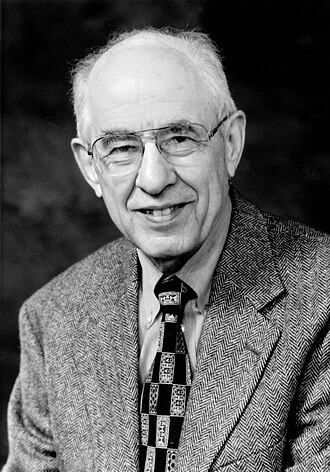
Hilary Whitehall Putnam was one of the most versatile and intellectually honest philosophers of the twentieth century. Over a career spanning six decades, mostly at Harvard, Putnam pursued an unusual philosophical itinerary: he defended positions that he later criticised with the same energy with which he had established them. He was a functionalist and then rejected functionalism; a scientific realist and then proposed “internal realism”; a sympathiser with logical positivism and then its critic. This willingness for self-criticism is one of the hallmarks of his philosophical style.
Key Concepts
Semantic Externalism — “Meanings Ain’t in the Head” (The Meaning of “Meaning”, in Language, Mind and Knowledge, Minnesota Studies in the Philosophy of Science, 1975): The Twin Earth thought experiment is one of the most famous in analytic philosophy. Imagine a planet almost identical to Earth where there exists a substance called “water” by its inhabitants, indistinguishable from ours in appearance and everyday behaviour, but whose chemical formula is XYZ, not H₂O. In 1750, before modern chemistry, an inhabitant of Earth and their counterpart on Twin Earth would have exactly the same mental states when thinking about “water” — but they would be referring to distinct substances. Conclusion: the meaning (extension) of a natural kind term is not determined by the speaker’s mental states, but partly by the actual structure of the environment. Hence the thesis: “Cut the pie any way you like, meanings just ain’t in the head.” This position, semantic externalism, was developed in parallel (and independently) by Kripke for proper names.
Functionalism (1960s): In articles such as “Minds and Machines” (1960) and “Psychological Predicates” (1967, also published as “The Nature of Mental States”), Putnam proposed that mental states are defined by their functional roles — the causal relations they bear to sensory inputs, behavioural outputs, and other mental states — not by the substance that realises them. Pain, for example, is the state caused by tissue damage and causing avoidance behaviour. This view implies multiple realisability: the same mental function can be realised by different physical substrates (human neurons, silicon circuits). Functionalism, largely through Putnam’s influence, became the dominant position in philosophy of mind from the 1970s onwards.
Rejection of Functionalism: Remarkably, Putnam abandoned the functionalism he had helped to found. In Representation and Reality (1988), he argued that functionalism fails to give an adequate account of qualia, intentionality, and semantic content. The multiple realisability argument — which had supported functionalism — could be turned against it: if any functional structure can be mapped onto arbitrary physical systems, then functionalism does not individuate mental states in a satisfactory way.
Brains in a Vat (Reason, Truth and History, 1981): Putnam uses the thought experiment of brains in a vat — beings with no physical bodies who receive neural stimuli generated by computers — to argue against radical scepticism, not in its favour. If we were brains in a vat, we could not refer to the condition “being a brain in a vat” with our ordinary words, since our causal chain of reference would not link those words to the relevant concept. Therefore, when a sceptic formulates the hypothesis, they presuppose a scenario that their very formulation refutes.
Internal Realism: In Reason, Truth and History (1981) and subsequent works, Putnam proposes internal realism: he rejects metaphysical realism (the idea that there exists a true description of reality independent of any conceptual scheme) without falling into relativism. Truth is an idealisation: what would be asserted by an epistemically ideal theory. This intermediate position was criticised by both realists and anti-realists.
Natural Realism and Late Pragmatism: In the final decades of his life, under the influence of William James, John Dewey, and the later Wittgenstein, Putnam developed a “pragmatism” he called, in some contexts, natural realism: perception is a direct opening onto the world, not a mediated internal representation. In The Threefold Cord: Mind, Body, and World (1999), he criticises the “veil of ideas” that separates subject from external world.
Quine-Putnam Indispensability Argument: In the philosophy of mathematics, Putnam (in collaboration with Quine) argued that mathematical entities must be admitted as existing because they are indispensable to our best scientific theories. If physics requires real numbers, we must acknowledge the existence of real numbers.
Influenced by
- Quine — naturalism, holism
- Carnap and Logical Positivism (early position, later criticised)
- William James and Dewey — pragmatism (growing influence in mature phase)
- Late Wittgenstein — language games, critique of representationalism
- Kripke — causal theory of reference (interaction and parallel development)
Influenced
- Jerry Fodor — language of thought and multiple realisability
- Tyler Burge — social externalism
- John McDowell — direct realism and perceptual content
- Debates on functionalism and philosophy of mind
- Contemporary philosophy of mathematics
Works
Philosophy of Logic (1971); Mathematics, Matter and Method (1975); Mind, Language and Reality (1975); Meaning and the Moral Sciences (1978); Reason, Truth and History (1981); Realism and Reason (1983); The Many Faces of Realism (1987); Representation and Reality (1988); Renewing Philosophy (1992); Words and Life (1994); The Threefold Cord (1999); Ethics without Ontology (2004); Philosophy in an Age of Science (2012).
See also
Analytic Philosophy Philosophy of Mind Saul Kripke W.V.O. Quine
Recommended books:
 Reason, Truth and History — Hilary Putnam
Ver na Amazon →
Reason, Truth and History — Hilary Putnam
Ver na Amazon →
 Mind, Language and Reality — Hilary Putnam
Ver na Amazon →
Mind, Language and Reality — Hilary Putnam
Ver na Amazon →