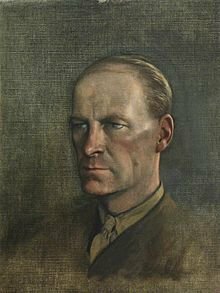
Gilbert Ryle was born in Brighton, England, on 19 August 1900 and died in Whitby, North Yorkshire, on 6 October 1976. He read classics and then philosophy at The Queen’s College, Oxford, became a tutor at Christ Church (1925–1940), and during the Second World War served in the Welsh Guards on intelligence work. After the war he was elected Waynflete Professor of Metaphysical Philosophy at Oxford, and he edited the journal Mind from 1947 to 1971. He was a leading figure of what is often called Oxford “ordinary language philosophy,” although he preferred to describe his method as charting the “logical geography” of concepts, that is, how expressions of different categories behave logically.
His early work includes the paper “Systematically Misleading Expressions” (1932), which argues that the grammatical form of sentences can conceal their logical form, a theme inherited from Bertrand Russell. Ryle also took an early interest in phenomenology and wrote on Husserl and Heidegger, including a review of Being and Time in Mind in 1929. The book for which he is best remembered, The Concept of Mind (1949), applies this method to the mind-body problem. In it Ryle attacks what he calls “Descartes’ Myth,” or the “official doctrine,” according to which every person has a body, subject to mechanical laws, and a mind, a private, non-spatial entity. His most famous label for that doctrine is “the dogma of the Ghost in the Machine,” coined in the book’s first chapter.
Key Concepts
- Category mistake — Ryle holds that Cartesian dualism treats the mind as if it belonged to the same logical category as bodies, merely a second “thing” of a special kind. He illustrates the mistake with the visitor who, after being shown the colleges, libraries and departments, asks where “the university” is, as though it were one more institution alongside the others. Asking “where is the mind over and above behaviour?” would, on his view, commit an analogous error.
- Ghost in the machine — Ryle’s name for the Cartesian picture of an immaterial mind steering a material body. The phrase is a critical characterization, not an expression used by Descartes.
- Knowing how and knowing that — a distinction presented in the paper “Knowing How and Knowing That” (presidential address to the Aristotelian Society, 1945–46) and developed in The Concept of Mind. Knowing how is a practical skill or ability (riding a bicycle, playing chess), which Ryle takes to be irreducible to knowing that, the knowledge of propositions. He criticizes the “intellectualist legend,” the view that every intelligent action must be preceded by a mental act of considering propositions. The distinction was later taken up and challenged, notably by the intellectualism of Jason Stanley and Timothy Williamson (2001).
- Dispositions — for Ryle, many mental concepts (belief, intelligence, will) designate dispositions and patterns of conduct rather than hidden episodes in an inner theatre. His position is therefore often called logical behaviourism, a label he himself rejected.
- Logical geography of concepts — philosophy’s task is to clarify the logical “geography” of concepts and dissolve confusions arising from category abuses.
Influenced by
- Bertrand Russell — the idea that grammatical form may mislead about logical form
- Ludwig Wittgenstein — attention to the use of expressions and philosophy as conceptual clarification (an influence discussed by commentators)
- Edmund Husserl and Martin Heidegger — objects of Ryle’s early study and commentary
- René Descartes — the principal target of the critique in The Concept of Mind
Influenced
- Daniel Dennett — Ryle’s doctoral student at Oxford, who acknowledges the debt in his philosophy of mind
- Twentieth-century dispositionalist and functionalist philosophy of mind, in dialogue with dualism and identity theories
- The contemporary epistemological debate on know-how and ability
- Among his Oxford students were, for example, A. J. Ayer, Bernard Williams and Peter Winch
Works
The Concept of Mind (1949); Dilemmas (1954); Plato’s Progress (1966); Collected Papers (1971); On Thinking (1979, posthumous).
See also
Descartes, Wittgenstein, Russell, J.L. Austin, Daniel Dennett, Husserl, Heidegger, David Lewis