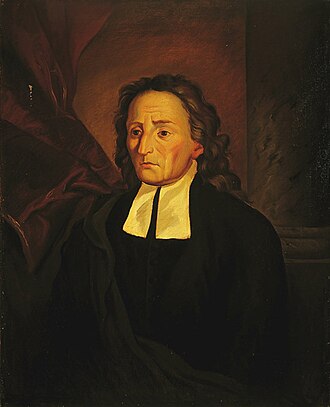
Giambattista Vico (1668–1744) was born and died in Naples, where he spent nearly his entire life as professor of rhetoric at the local university — a post he held from 1699 onward that secured him a modest living but little academic prestige compared to the jurists and scientists of his day. Trained in law but self-taught in classical philology, Roman history, and philosophy, Vico built his work at a remove from the dominant currents of his time, above all Cartesian rationalism, which ruled the European universities and which he subjected to systematic critique as early as De nostri temporis studiorum ratione (On the Study Methods of Our Time, 1709). Against the Cartesian ambition to found all knowledge on the mathematical-deductive model, Vico argued that the human sciences — history, law, philology — require a method of their own, grounded not in geometric evidence but in the imaginative and historical reconstruction of human works.
That intuition matured into the principle that became his philosophical signature, formulated in De antiquissima Italorum sapientia (1710): verum-factum — “the true and the made are convertible” (verum et factum convertuntur). We can know with certainty only what we ourselves have made: God knows nature perfectly because he created it; human beings, in turn, can know with certainty mathematics (which they invent) and the civil world — languages, laws, customs, institutions — because these are human works, not immutable natural givens. This principle inverted Cartesian epistemological priorities and laid the groundwork for a new science devoted not to physical nature but to the “world of nations.”
That science took shape in his masterwork, the Principi di Scienza Nuova d’intorno alla comune natura delle nazioni (Principles of a New Science Concerning the Common Nature of Nations), first published in 1725, revised in 1730, and reissued in its definitive form in the very year of his death, 1744. In it, Vico reconstructs the ideal eternal history common to all nations through three successive ages — the age of gods, the age of heroes, and the age of men — each with its own language (hieroglyphic, symbolic, epistolary), form of government, and characteristic mentality. The passage between ages is no guaranteed linear progress: civilizations can regress into barbarism — the “barbarism of reflection” — restarting the cycle in a ricorso. This pattern of corsi e ricorsi (courses and recourses) is the fundamental temporal structure of human history as Vico conceives it. Central to this whole reconstruction is the notion of sapienza poetica (poetic wisdom): the earliest human beings, incapable of rational abstraction, understood the world through “fantastic universals” — mythical figures, metaphors, personifications — that form the primitive matrix of all language, religion, and law.
Vico’s work remained largely forgotten outside Naples until the nineteenth century, when the French historian Jules Michelet translated and popularized it, recognizing in it an anticipation of the Romantic philosophy of history. In the early twentieth century, Benedetto Croce recovered Vico for the Italian historicist tradition, and later Isaiah Berlin turned to him as a forerunner of cultural pluralism and of what Berlin called the “Counter-Enlightenment.” Today Vico is widely recognized as the founder of the modern philosophy of history.
Key Concepts
- Verum-factum: the principle that we can truly know only what we ourselves have made; it grounds the possibility of a science of the civil world, since this world — unlike physical nature — is the work of human beings themselves.
- Scienza Nuova: the “new science” of nations, which seeks to reconstruct, from traces of language, myth, law, and institutions, the “ideal eternal history” common to all peoples.
- The three ages: the age of gods, the age of heroes, and the age of men — the sequence structuring the development of every civilization, each with its own language, law, and form of government.
- Corsi e ricorsi: the cyclical pattern whereby civilizations, after reaching their rational apex, can regress into barbarism (the “barbarism of reflection”) and restart the historical cycle.
- Sapienza poetica (poetic wisdom): the mode of knowledge of the earliest human beings, who understood the world through “fantastic universals” — mythical figures and metaphors — prior to the development of abstract-rational thought.
Influenced by
- Descartes — the target of Vico’s critique of the mathematical-deductive method wrongly applied to the human sciences
- Francis Bacon — the inductive method and the emphasis on natural and civil history as the basis of knowledge
- Tacitus — historical realism and attention to the passions and concrete circumstances of human action
- Plato — the notion of a wisdom (sapienza) that precedes and grounds rational knowledge
- Hugo Grotius — a critical interlocutor in the debate on natural law, which Vico historicizes and culturally relativizes
Influenced
- Jules Michelet — translator and popularizer of Vico in nineteenth-century France, recognizing him as a forerunner of the Romantic philosophy of history
- Benedetto Croce — author of La filosofia di Giambattista Vico (1911), responsible for reintegrating Vico into the Italian historicist tradition
- Isaiah Berlin — in Vico and Herder (1976), read Vico as a source of cultural pluralism and the “Counter-Enlightenment”
- R. G. Collingwood — an explicit reference point in The Idea of History (1946) for history as imaginative reconstruction of the past
- The tradition of European historicism, which recognizes in Vico one of the first thinkers to assert the irreducibility of the human-historical world to the model of the natural sciences
Works
De nostri temporis studiorum ratione (1709); De antiquissima Italorum sapientia (1710); Principi di una Scienza Nuova d’intorno alla comune natura delle nazioni (1st ed. 1725; 2nd rev. ed. 1730; definitive 3rd ed. 1744); Vita di Giambattista Vico scritta da se medesimo (autobiography, 1725–1728).
See also
Descartes, Isaiah Berlin, Rousseau