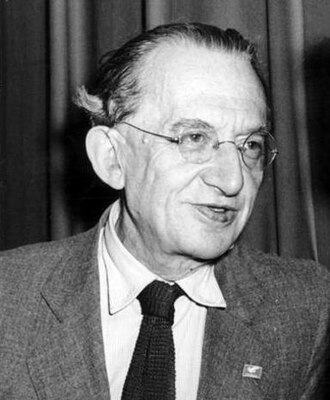
Georg (György) Lukács (13 April 1885, Budapest — 4 June 1971, Budapest) was a Hungarian philosopher and literary critic who, with his 1923 work, founded what would come to be called Western Marxism. Born into a wealthy, assimilated Jewish family, he was formed in German neo-Kantian culture — he was close to Georg Simmel and Max Weber — before joining communism in 1918. He was People’s Commissar for Education and Culture in the short-lived Hungarian Soviet Republic of 1919 and, decades later, minister of culture in Imre Nagy’s government during the 1956 Hungarian Revolution. His path, crossed by successive self-criticisms and a tense relationship with Stalinism, runs from a pre-Marxist aesthetics to a Hegelian Marxism and, finally, to a vast Ontology of Social Being.
Key Concepts
- Reification (Verdinglichung): Lukács’s most influential contribution, in History and Class Consciousness (1923). Extending Marx’s commodity fetishism and crossing it with Max Weber’s rationalization, Lukács holds that under capitalism the commodity form contaminates all of social life and consciousness itself: relations between persons take on the character of relations between things, and the world appears as a set of fragmented, quantifiable facts.
- Totality: against this fragmentation, the category of totality is “the bearer of the revolutionary principle in science.” To grasp society as a dynamic whole, rather than as isolated fragments, is the standpoint the bourgeois perspective cannot reach.
- The proletariat as the identical subject-object of history: by becoming conscious of itself — of being, itself, a commodity — the proletariat becomes the class able to grasp the totality and abolish reification. In it, the subject and object of historical knowledge coincide. (A Hegelian-inspired thesis that the Third International condemned as idealist, leading Lukács to partly disavow it.)
- Imputed class consciousness: revolutionary consciousness is not workers’ empirical opinion but the “imputed” (zugerechnet) consciousness — what would correspond to the class’s objective position were it fully grasped.
- The aesthetics of realism: in his mature phase, Lukács turned to literary theory, defending realism (Balzac, Tolstoy, Thomas Mann) against modernism and the avant-garde, in his famous debate with Brecht, Bloch, and Adorno. In The Destruction of Reason (1954), a polemical and controversial work, he traced a lineage of German irrationalism leading to fascism.
Influenced by
- Marx — commodity fetishism and the critique of political economy
- Hegel — dialectics, totality, and the subject-object
- Max Weber and Georg Simmel — rationalization and the sociology of culture
Influenced
- The Frankfurt School — Theodor W. Adorno, Walter Benjamin, Herbert Marcuse (whom Lukács would later accuse of dwelling in the “Grand Hotel Abyss”)
- Antonio Gramsci and the tradition of Western Marxism
- Lucien Goldmann and the sociology of literature
- The theory of reification revived by Axel Honneth
Works
The Theory of the Novel (Die Theorie des Romans, 1916); History and Class Consciousness (Geschichte und Klassenbewusstsein, 1923); The Historical Novel (1937); The Destruction of Reason (1954); Aesthetics and Toward an Ontology of Social Being (late works).
See also
Marx, Antonio Gramsci, Louis Althusser