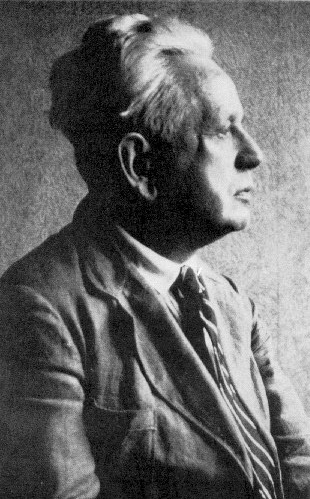
Ernst Cassirer was born in Breslau (present-day Wrocław, Poland) on 28 July 1874 and died in New York on 13 April 1945. Trained within the Neo-Kantian tradition of the Marburg School — whose leading figures were Hermann Cohen and Paul Natorp — Cassirer began his intellectual career editing Leibniz’s writings and studying the logical foundations of the exact sciences. Yet the project that would make him singular in twentieth-century philosophy was a radical expansion of the Kantian inheritance: where Kant had asked about the conditions of possibility of scientific knowledge, Cassirer asked about the conditions of possibility of all human meaning — from myth to language, from art to science. This reorientation produced the monumental Philosophy of Symbolic Forms (3 vols., 1923–1929), a work that transformed Neo-Kantian epistemology into a philosophy of culture with full anthropological scope.
Cassirer’s biography is also a biography of exiles. He was appointed professor in Hamburg in 1919 and became the first Jewish rector of a German university (1929–1930). With the rise of National Socialism he emigrated in 1933, passing through Oxford, the University of Gothenburg (1935–1941), Yale, and finally Columbia University. In the works written in exile — above all An Essay on Man (1944) and the posthumous The Myth of the State (1946) — Cassirer turned the conceptual resources of the philosophy of symbolic forms toward the diagnosis of the political crisis of his century. He died just days after taking part in a symposium at Columbia, in April 1945.
Key Concepts
Philosophy of Symbolic Forms — Cassirer’s central thesis is that the human spirit never accesses reality directly but always through symbolic forms: systems of signs and structures of meaning through which experience is organised and the world constituted. Myth, language, religion, art, and science are not more or less accurate descriptions of a pre-given reality; they are distinct modes of symbolic constitution of the real, each with its own internal logic. The three-volume work examines language (vol. I), mythical thought (vol. II), and scientific knowledge — the phenomenology of knowledge — (vol. III).
Animal symbolicum — In An Essay on Man (1944), Cassirer argues that the classical definition of the human being as animal rationale is insufficient: reason is only one of the spirit’s symbolic functions. The more precise definition is animal symbolicum — the being who lives not directly in the physical universe but in a symbolic universe of language, myth, art, and science. This formula concentrates Cassirer’s philosophical anthropology and decisively influenced philosophers such as Susanne Langer.
Critique of Culture as extension of Kantian critique — For Cassirer, Kant had produced a Critique of Pure Reason and a Critique of Practical Reason; what was still needed was a critique of culture that would investigate the conditions of possibility not just of scientific knowledge but of every form of human signification. The philosophy of symbolic forms is that critique of culture.
Myth as an autonomous symbolic form — Against the Enlightenment tendency to treat myth as primitive science or superstition to be superseded, Cassirer argues that mythical thought possesses its own logic — physiognomic, centred on personal forces and the sacred — irreducible to scientific logic. This rehabilitation of myth as a legitimate form of the spirit has, however, a political counterpart: in The Myth of the State (1946) Cassirer analyses how modern political myths (fascism, National Socialism) exploit mythical logic for the ends of domination.
The Davos Debate (1929) — In March 1929, in Davos (Switzerland), Cassirer and Heidegger held a celebrated public debate on the interpretation of Kant and the future of philosophy. For Cassirer, Kant was the champion of universal reason and cosmopolitan humanism; for Heidegger, what mattered in Kant was finitude, temporality, and the analytic of Dasein. The debate became a symbol of the confrontation between humanist Neo-Kantianism and Heidegger’s fundamental ontology.
Philosophy of the Enlightenment — In The Philosophy of the Enlightenment (Die Philosophie der Aufklärung, 1932), Cassirer provides a systematic analysis of eighteenth-century European thought, arguing that the Enlightenment was not merely an era of shallow optimism but a programme of rational critique that encompassed science, religion, politics, aesthetics, and philosophy of history.
Influenced by
- Kant — foundation of all Cassirean philosophy: the question of the conditions of possibility of knowledge and the idea that the subject constitutes the object
- Hermann Cohen — founder of the Marburg School; Neo-Kantianism as a philosophy of scientific knowledge
- Paul Natorp — Cassirer’s direct teacher at Marburg; logic of the sciences and genetic psychology
- Wilhelm Dilthey — philosophy of culture and the human sciences as a legitimate philosophical field
- Hegel — the concept of objective spirit and cultural achievements as self-objectification of spirit; Cassirer is more critical than derivative of Hegel, but the structural influence is recognisable
Influenced
- Susanne Langer — direct disciple; Philosophy in a New Key (1942) and Feeling and Form (1953) develop Cassirer’s theory of symbolic forms in the philosophy of art and mind
- Nelson Goodman — Languages of Art (1968) and the idea of “ways of worldmaking” engage with Cassirer’s symbolic constitution of reality
- Philosophy of culture and philosophical anthropology in the twentieth century — the concept of animal symbolicum became a canonical reference
- Enlightenment studies — his Philosophy of the Enlightenment remains a fundamental historiographical reference
Works
Leibniz’ System in seinen wissenschaftlichen Grundlagen (1902); Das Erkenntnisproblem in der Philosophie und Wissenschaft der neueren Zeit (The Problem of Knowledge in Philosophy and Science of the Modern Age, 4 vols., 1906–1957); Substanzbegriff und Funktionsbegriff (Substance and Function, 1910); Philosophie der symbolischen Formen (The Philosophy of Symbolic Forms, 3 vols.: vol. I, 1923; vol. II, 1925; vol. III, 1929); Die Philosophie der Aufklärung (The Philosophy of the Enlightenment, 1932); An Essay on Man (1944); The Myth of the State (1946, posthumous).
See also
Kant; Heidegger; Susanne Langer; Hermann Cohen; Wilhelm Dilthey; Neo-Kantianism; Philosophy of Culture
Recommended Books:
 The Philosophy of Symbolic Forms, Vol. 1 — Ernst Cassirer (Yale UP)
Ver na Amazon →
The Philosophy of Symbolic Forms, Vol. 1 — Ernst Cassirer (Yale UP)
Ver na Amazon →