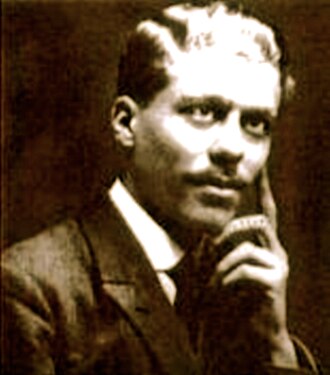
Emmanuel Mounier was born in Grenoble on 1 April 1905 and died in Châtenay-Malabry, near Paris, on 22 March 1950. He studied philosophy in Grenoble, where he was a student of Jacques Chevalier, and in Paris. In 1932 he founded, with Georges Izard and other collaborators, the journal Esprit, which he edited until his death and which became the main vehicle of personalism in France. In August 1941 the Vichy regime banned the journal; Mounier was arrested in 1942 and later released and acquitted. The journal resumed publication after the war. He died at 44, in the midst of intellectual activity, leaving a body of work aimed less at building a system than at guiding a movement of ideas and commitment.
Mounier’s personalism arises from the simultaneous rejection of two tendencies that he saw as threats to the person: liberal individualism, which he thought isolated the individual and reduced him to the pursuit of his own interests, and collectivist and totalitarian forms, which would absorb him into a mass or an apparatus. In both cases the person would lose what is proper to it: vocation, commitment and openness to others.
Key Concepts
- Communitarian personalism — the doctrine that the person is neither a thing nor a part but a center of freedom and responsibility that is realized only in community; formulated in Révolution personnaliste et communautaire (1935) and Manifeste au service du personnalisme (1936).
- Person and individual — the individual would be dispersion and closure upon oneself; the person, by contrast, exists to the extent that it commits and communicates itself. The person ultimately escapes objectification and so cannot be reduced to a definition of the scientific type.
- Engagement — the person is constituted in action and in commitment to the world, which gives Mounier’s reflection a practical, political and social bent and justifies the participation of intellectuals in public life.
- Critique of capitalist property — in De la propriété capitaliste à la propriété humaine (1936), he proposes reforming forms of property in light of the dignity of the person.
- Dialogue with existentialism — in Introduction aux existentialismes (1946), he examines Christian and atheist existentialism and distinguishes personalism from both.
- Systematic synthesis — Qu’est-ce que le personnalisme? (1947) and Le personnalisme (1949) offer the most didactic exposition of his doctrine.
Influenced by
- Charles Péguy, the moral and literary reference of the Esprit group
- Henri Bergson, for the philosophy of life and creation
- Jacques Maritain, whose Integral Humanism is often compared with Mounier’s personalism, although there are differences and disagreements between the two
Influenced
- Postwar Catholic social and political thought, in particular the debate on person and community in European Christian democracy
- Intellectuals associated with Esprit, among them Paul Ricoeur and Jean-Marie Domenach, who later edited the journal
- Personalism as a philosophical current and as a reference for texts of social doctrine
Works
Révolution personnaliste et communautaire (1935); Manifeste au service du personnalisme (1936); De la propriété capitaliste à la propriété humaine (1936); Traité du caractère (1946); Introduction aux existentialismes (1946); Qu’est-ce que le personnalisme? (1947); Le personnalisme (1949).
See also
Jacques Maritain, Gabriel Marcel, Nikolai Berdiáev, Søren Kierkegaard, Paul Ricoeur