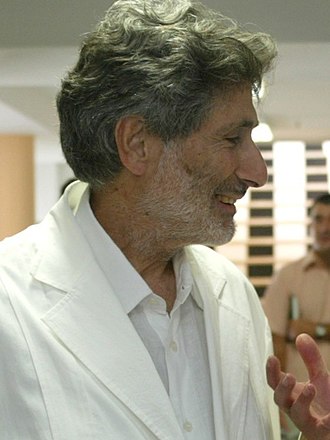
Edward Wadie Said (1935–2003) was a Palestinian-American literary critic and cultural theorist. He was born in Jerusalem under the British Mandate to a Palestinian Christian family, raised between Jerusalem and Cairo, educated at Princeton and Harvard, and taught comparative literature at Columbia University from 1963 until his death. His book Orientalism (1978) is regarded as the founding text of postcolonial studies: there, drawing on Foucault (discourse/power) and Gramsci (hegemony), Said argues that “the Orient” is not a neutral region of the world but a construction of Western discourse that produces its object and legitimises colonial domination. Said was also a leading public intellectual: a member of the Palestinian National Council from 1977 to 1991, an advocate of the Palestinian cause, and an influential model of the “exilic intellectual” and dissenter.
Key Concepts
- Orientalism (Orientalism, 1978): a historically structured set of knowledges, institutions, and representations through which the West produces “the Orient” as its essential Other — backward, despotic, sensual, feminised — and, by means of that production, authorises itself to govern it.
- Colonial discourse (Orientalism, 1978): a Foucauldian reading according to which philology, literature, anthropology, and colonial administration form a network of power/knowledge, and not mere descriptions of a pre-existing reality.
- Imaginative geographies (Orientalism, 1978): the culturally produced division of the world into “us” and “them” that precedes and frames any empirical encounter with the other.
- Filiation and affiliation (The World, the Text, and the Critic, 1983): a conceptual pair distinguishing bonds of nature or birth (filiation) from the elective, critical bonds (affiliation) constructed by the intellectual in the world.
- Culture and empire (Culture and Imperialism, 1993): European high culture — including the realist novel from Austen to Conrad — is not external to the imperial enterprise: it is partially constituted by it and contributes to its naturalisation.
- The exilic intellectual (Representations of the Intellectual, 1994): the figure of the critic who refuses comfortable integration, addresses a broad public, speaks on behalf of those absent from power, and keeps an outsider’s stance even inside the academy.
- Contrapuntal reading (Culture and Imperialism, 1993): a method of reading that recovers, alongside the metropolitan canon, the colonial histories it silences, treating them as simultaneous voices in counterpoint.
Influenced by
- Foucault — discourse analysis and the power/knowledge nexus
- Gramsci — cultural hegemony and the organic intellectual
- Erich Auerbach — Mimesis and comparative philology as exile
- Vico — history as a human product (verum-factum)
Influenced
- Gayatri Spivak — subaltern studies and postcolonial critique
- Homi Bhabha — hybridity and colonial mimicry
- Achille Mbembe — the African postcolony
- Talal Asad — anthropology of religion and the secular
- Postcolonial studies as an institutional field
Works
Before Orientalism (1978), Said had published Beginnings: Intention and Method (1975), a methodological reflection on what it means to begin a work. The Question of Palestine (1979) and Covering Islam (1981) politically extend the argument of Orientalism. The World, the Text, and the Critic (1983) gathers essays on literary criticism and worldliness. Culture and Imperialism (1993) is the most ambitious complement and counterpart to Orientalism. The 1993 Reith Lectures were published as Representations of the Intellectual (1994). Out of Place (1999) is the memoir of his Palestinian-Egyptian childhood.
See also
Foucault, Gayatri Spivak, Frantz Fanon