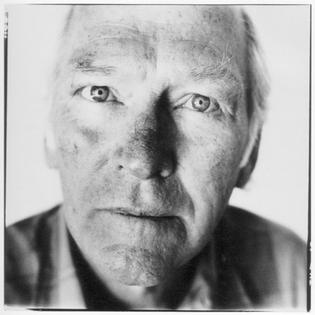
Donald Davidson was one of the most original analytic philosophers of the second half of the twentieth century. A professor at the University of California, Berkeley from 1981, following positions at Stanford, Princeton, and Rockefeller, Davidson constructed a philosophical system remarkable for its internal coherence: his philosophy of mind, theory of action, semantics, and epistemology are closely interconnected, articulated around the themes of events, causation, truth, and interpretation.
Key Concepts
Anomalous Monism (Mental Events, published in Experience and Theory, 1970): Davidson argues that mental events are identical to physical events, but that this identity does not entail the existence of strict psychophysical laws. The central argument distinguishes three theses: (1) there is causal interaction between mental and physical events; (2) causally related events are covered by deterministic laws; (3) there are no strict laws connecting mental and physical descriptions. Davidson’s solution is to hold that a single event can be described in both mental and physical terms — but that mental properties are anomalous: there are no psychophysical laws enabling reduction of the mental to the physical. This is a form of monism (physics is the only causal domain) combined with anomaly (the mental is not reducible to physical laws).
Events as Basic Entities: Prior to defending anomalous monism, Davidson had developed, in “The Logical Form of Action Sentences” (1967) and in essays collected in Essays on Actions and Events (1980), an ontology in which events are concrete particulars, distinct from objects and facts. His causal criterion of event individuation — two events are identical if and only if they have the same causes and the same effects — proved highly influential and widely debated.
Tarskian Theory of Meaning (Truth and Meaning, Synthese, 1967): Davidson proposes that the semantics of a natural language can be provided by a Tarski-style truth theory — a theory that generates, for each sentence s of the language, a sentence of the form “s is true if and only if p”. Such a theory would not merely be a theory of truth, but would yield the truth conditions of each sentence, and truth conditions are what constitutes meaning. This proposal set the agenda for formal semantics for decades.
Radical Interpretation and the Principle of Charity: In “Radical Interpretation” (1973) and “On the Very Idea of a Conceptual Scheme” (1974 — presidential address to the American Philosophical Association), Davidson develops the notion of radical interpretation: imagining oneself in the position of someone trying to interpret a speaker’s language and beliefs without presupposing any prior knowledge of their meanings. In this situation, the interpreter must maximise the coherence and truth of the speaker’s beliefs — this is the principle of charity. Charity is not merely a methodological rule; it is a constitutive condition of interpretation: it makes no sense to attribute massively false or irrational beliefs to a speaker.
Critique of Conceptual Scheme and Conceptual Relativism: In “On the Very Idea of a Conceptual Scheme” (1974), Davidson attacks the idea that different cultures or theories inhabit incommensurable conceptual schemes. The argument is that the intelligibility of the notion of a different conceptual scheme depends on the possibility of translating it — and if it is translatable, it is not radically different. The rigid separation of scheme from content — what Davidson called “the third dogma of empiricism” — is incoherent.
Mental Holism: Attributions of beliefs, desires, and intentions form a holistic network — no mental state can be individually identified without considering its relations to other states. This holism underlies both anomalous monism and the principle of charity.
Influenced by
- Quine — epistemic holism, naturalism, rejection of mental entities as basic categories
- Alfred Tarski — semantic theory of truth
- Wittgenstein — language games, rule-following, critique of private language
- Frege and Russell — logic and philosophy of language
- Carnap — formal semantic analysis
Influenced
- John McDowell — mind and world, conceptual content
- Ernest Lepore and Kirk Ludwig — systematic Davidson commentators
- Contemporary philosophy of action
- Formal semantics and philosophy of language
- Debates on anomalous monism in philosophy of mind
Works
Essays on Actions and Events (1980); Inquiries into Truth and Interpretation (1984); Subjective, Intersubjective, Objective (2001); Problems of Rationality (2004, posthumous); Truth, Language, and History (2005, posthumous). Key articles: “Actions, Reasons, and Causes” (1963); “Truth and Meaning” (1967); “Mental Events” (1970); “Radical Interpretation” (1973); “On the Very Idea of a Conceptual Scheme” (1974).
See also
Analytic Philosophy Philosophy of Mind W.V.O. Quine
Recommended books:
 Essays on Actions and Events — Donald Davidson
Ver na Amazon →
Essays on Actions and Events — Donald Davidson
Ver na Amazon →
 Inquiries into Truth and Interpretation — Donald Davidson
Ver na Amazon →
Inquiries into Truth and Interpretation — Donald Davidson
Ver na Amazon →