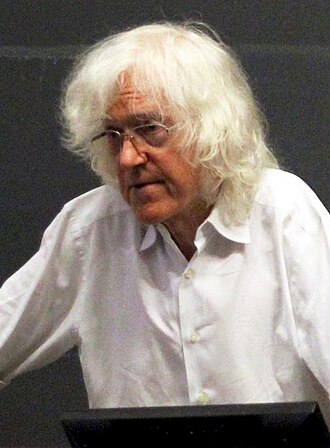
Derek Parfit (11 December 1942, Chengdu, China — January 2017, Oxford) was a British philosopher, a fellow of All Souls College, Oxford, regarded as one of the most important moral philosophers of the late twentieth century. He worked obsessively and almost ascetically, and published little — but each work left a deep mark on the philosophy of personal identity, rationality, and ethics. His Reasons and Persons (1984) is one of the landmark works of contemporary analytic philosophy.
Key Concepts
- Reductionism about personal identity: for Parfit, there is no substantial, indivisible “self” underlying experience. A person “just consists” in the existence of a brain and a body and the occurrence of a series of interrelated physical and mental events. Personal identity is not a further, deep fact over and above these facts.
- Relation R and “what matters”: Parfit’s most famous thesis is that identity is not what matters. What matters in survival is Relation R — psychological continuity and connectedness (memories, intentions, character traits). Thought experiments such as teletransportation and brain division show that identity can be indeterminate, whereas Relation R suffices for everything that really matters to us. Parfit reported finding this conclusion “liberating, and consoling,” and noted its affinity with the Buddhist doctrine of no-self.
- The Repugnant Conclusion: in population ethics, Parfit demonstrated a disconcerting paradox: for any large population with a very high quality of life, there seems to be a much larger population whose lives are barely worth living that would, on certain principles, be “better.” He spent his life seeking a “Theory X” that would avoid this conclusion — and confessed he had not found it.
- The Non-Identity Problem: our choices (for instance, over policies affecting the distant future) determine who will come to exist; so an act that makes future life worse harms no particular person, which challenges ethics centered on harm to individuals.
- The Triple Theory (On What Matters, 2011): in his final work, Parfit argues that Kantianism, Scanlon’s contractualism, and rule consequentialism, properly formulated, converge — “climbing the same mountain on different sides.” He also defends a non-naturalist moral realism: there are objective normative truths, even if they are not natural facts.
Influenced by
- Henry Sidgwick — utilitarianism and the methods of ethics
- Kant — the formula of humanity and the ethics of reason
- Hume and Locke — the problem of the identity of the self
- John Rawls and Thomas Nagel — analytic moral and political philosophy
Influenced
- Population ethics and the debate over future generations
- Effective altruism and contemporary practical ethics
- Debates on practical rationality and normative reasons
- The discussion of personal identity from Bernard Williams onward
Works
Reasons and Persons (1984); On What Matters (vols. I–II, 2011; vol. III, 2017).
See also
Bernard Williams, Thomas Nagel, Peter Singer