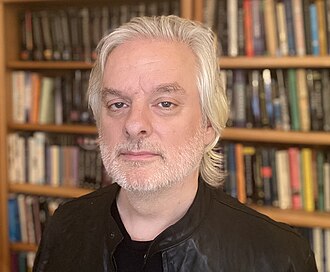
David John Chalmers is one of the most influential philosophers of mind of the past three decades. Born in Sydney, Australia, and trained in mathematics before turning to philosophy, Chalmers became a professor at the University of Arizona and later at New York University (NYU), where he co-directs the Center for Mind, Brain and Consciousness. His debut book, The Conscious Mind (1996), redefined the terms of the debate on consciousness and placed what he named the “hard problem” at the centre of the philosophical and scientific agenda.
Key Concepts
The Hard Problem of Consciousness (The Conscious Mind: In Search of a Fundamental Theory, Oxford University Press, 1996; and in the article “Facing Up to the Problem of Consciousness”, Journal of Consciousness Studies, 1995): Chalmers distinguishes two kinds of problems about the mind. The easy problems — despite the name, they are not trivial — involve explaining cognitive functions such as perception, attention, memory, behavioural control, and information integration. They are “easy” in the sense that, in principle, they can be solved by progress in neuroscience and cognitive science: it suffices to identify the neural mechanisms that perform each function. The hard problem is radically different: why, when these functional processes occur, is there subjective experience at all? Why does the processing of visual information not occur “in the dark”, without anything being what-it-is-like-for-me to see the blue of the sky? The question concerns the existence of qualia — the subjective, intrinsic quality of conscious experience — and of what it is like to be, an expression Chalmers takes from Thomas Nagel (“What Is It Like to Be a Bat?”, 1974).
Philosophical Zombies: The central argument against physicalism. A philosophical zombie is a being that is physically identical to a human — atom for atom, synapse for synapse, functional process for functional process — but that has no conscious experience whatsoever: it is “dark inside”, without qualia. Chalmers argues that such zombies are conceivable and metaphysically possible: we can conceive of them without contradiction, and if they are conceivable, they are possible in some relevant metaphysical sense. If zombies are possible, then consciousness is not identical to any physical state — which refutes type-identity physicalism and, according to Chalmers, any physicalism that reduces experience to function.
Naturalistic Dualism: Chalmers is not a Cartesian substance dualist. He proposes property dualism: there is a single substance (the physical world), but it has phenomenal properties that are not reducible to physico-functional properties. The psychophysical laws connecting the physical to the phenomenal are fundamental laws of nature — as basic as the laws of physics. Hence “naturalistic”: consciousness is part of nature, but is not reducible to physics.
Panpsychism: In more recent work, Chalmers has explored panpsychism as a possible response to the hard problem: if experience cannot be reduced to the physical, and if physics admits intrinsic properties about which it knows little, perhaps experience is a fundamental intrinsic property, present in some form at all levels of reality. Chalmers does not endorse this position as a certainty, but presents it as the most coherent of the available options given the difficulties of physicalism.
Two-Dimensional Semantics: In dialogue with Kripke and Kaplan, Chalmers developed a two-dimensional semantics that distinguishes two ways in which an expression can have meaning: the primary intension (what the term picks out as a function of how the actual world is) and the secondary intension (what the term rigidly designates across all possible worlds). This distinction allows a response to the Kripkean objection that the zombie argument fails because it confuses conceivability with metaphysical possibility: Chalmers argues that, with two-dimensional semantics properly understood, the conceivability of zombies entails their metaphysical possibility.
Constructing the World (Oxford University Press, 2012): In this more systematic book, Chalmers defends a form of a priori compression of knowledge: all truths can be derived from a minimal set of basic truths (PQTI: physics, qualia, indexicals, and logic), together with a “that’s all” principle. This neo-Carnapian project aims to show that, even if consciousness is not reducible to the physical, the totality of knowledge can be rigorously structured.
Reality+: Virtual Worlds and the Philosophy of Mind (W. W. Norton, 2022): Chalmers argues that virtual reality is genuinely real — not merely an illusory simulation — and uses this argument to explore questions about what makes something real, the nature of perception, and scepticism about the external world.
Influenced by
- Thomas Nagel — “What Is It Like to Be a Bat?” (1974), the problem of subjectivity
- Frank Jackson — the knowledge argument / Mary’s Room (qualia)
- Kripke — possible worlds semantics, a posteriori necessity
- Descartes — mind-body dualism (revisited critically)
- David Lewis — possible worlds, semantics
Influenced
- Contemporary debates on consciousness and neuroscience
- Giulio Tononi — Integrated Information Theory (IIT)
- Galen Strawson and Philip Goff — analytic panpsychism
- Philosophy of mind and cognitive science
- Discussions on artificial intelligence and consciousness
Works
The Conscious Mind: In Search of a Fundamental Theory (1996); Philosophy of Mind: Classical and Contemporary Readings (ed., 2002); Constructing the World (2012); Reality+: Virtual Worlds and the Philosophy of Mind (2022). Key articles: “Facing Up to the Problem of Consciousness” (1995); “Does Conceivability Entail Possibility?” (2002).
See also
Philosophy of Mind Donald Davidson Hilary Putnam
Recommended books:
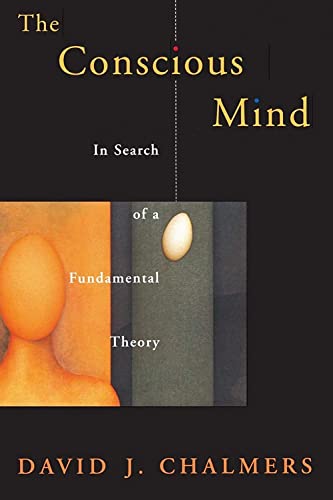 The Conscious Mind — David Chalmers
Ver na Amazon →
The Conscious Mind — David Chalmers
Ver na Amazon →
 Reality+ — David Chalmers
Ver na Amazon →
Reality+ — David Chalmers
Ver na Amazon →