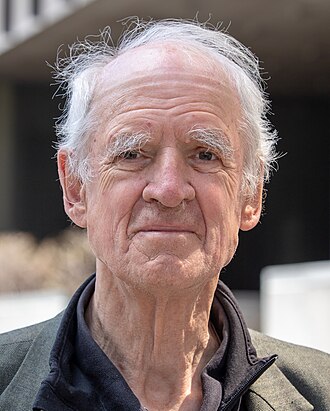
Charles Taylor (b. 1931, Montreal) is a Canadian philosopher and professor emeritus at McGill University, widely regarded as one of the most influential voices in contemporary political and moral philosophy. Trained at Oxford, where he wrote his doctorate under Isaiah Berlin, Taylor brings together the continental hermeneutic tradition — especially Hegel, Heidegger, and Gadamer — and Anglo-American analytic debate in a rare synthesis. A Catholic convert, he is often associated with communitarianism, though he resists rigid labels. His work investigates the historical conditions of modern identity, the limits of naturalism in the human sciences, and the place of the religious in secular societies. He received the Templeton Prize in 2007 and the Kyoto Prize in 2008.
Key Concepts
- The disengaged self (Sources of the Self, 1989): modernity produced the image of a subject who steps back reflectively from world, body, and community in order to constitute itself as a free agent; Taylor shows that this “disengagement” has concrete historical roots — in Descartes, Locke, and Puritanism — and is not a neutral deliverance of reason.
- Frameworks of meaning (Sources of the Self, 1989): every human identity is constituted against qualitative moral horizons — distinctions between higher and lower, worthy and unworthy — without which agents lose their bearings; the modern ideal of axiological neutrality is, for Taylor, self-defeating.
- Politics of recognition (The Politics of Recognition, 1992): identity is formed dialogically, and misrecognition or non-recognition by others can inflict real harm; properly understood, multiculturalism requires taking cultural differences seriously as moral demands.
- Ethics of authenticity (The Ethics of Authenticity, 1991): the modern ideal of being true to oneself need not collapse into subjectivism or narcissism; Taylor recovers it as a serious moral demand, anchored in horizons of meaning that the individual does not create alone.
- A secular age and the immanent frame (A Secular Age, 2007): secularisation has not consisted in the simple retreat of religion, but in the construction of an “immanent frame” — an order in which life can be lived fully without reference to the transcendent; this changes the conditions of belief, making faith one option among others rather than an evident background.
- Critique of naturalism (Philosophy and the Human Sciences, 1985): the human sciences cannot be modelled on physics; the human being is a “self-interpreting animal”, and understanding human action requires hermeneutics, not merely causal explanation.
Influenced by
- Hegel — Sittlichkeit, community, and history
- Heidegger — being-in-the-world, critique of Cartesian subjectivism
- Gadamer — hermeneutics and historical horizons
- Wittgenstein — meaning, practice, and forms of life
- Merleau Ponty — embodiment and engaged perception
Influenced
- Michael Sandel — communitarian critique of procedural liberalism
- Axel Honneth — theory of recognition
- William Connolly — pluralism and critical secularism
- James Tully — multicultural political philosophy
- Debates on identity, multiculturalism, and post-secularity in general
Works
The monograph Hegel (1975) established Taylor as a major interpreter of German philosophy. Philosophy and the Human Sciences (1985) collects decisive essays on hermeneutics and the critique of naturalism. Sources of the Self: The Making of the Modern Identity (1989) traces the genealogy of modern Western identity from Plato to Romantic expressivism. The Ethics of Authenticity (1991) is his most accessible public intervention. A Secular Age (2007) — his most ambitious work — reconstructs the history of Western secularisation across five centuries. The Language Animal (2016) crystallises his philosophy of language as constitutive rather than merely designative.
See also
Alasdair MacIntyre, Michael Sandel, Hegel