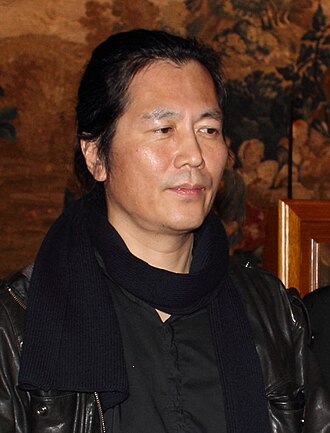
Byung-Chul Han (한병철, b. 1959, Seoul) is a South Korean philosopher based in Germany. He studied metallurgy in Seoul before moving to Germany, where he completed his philosophy studies in Freiburg and Munich with a doctoral dissertation on Heidegger. He was professor at the University of the Arts in Berlin and has become one of the most widely translated voices of contemporary cultural criticism thanks to a series of short, aphoristic, densely phenomenological books. His central thesis is that contemporary society has moved from Foucault’s “disciplinary society” to a Leistungsgesellschaft — an achievement or performance society — in which the subject, dispensed from external coercion, exerts upon itself a violence all the more effective because voluntary. Han draws on Heidegger, Hegel, Hannah Arendt, and East Asian thought (especially Zen Buddhism) to diagnose our age.
Key Concepts
- Burnout society (Müdigkeitsgesellschaft, 2010; English: The Burnout Society, 2015): the prevailing pathological paradigm is no longer infection (proper to the immunological, disciplinary age) but exhaustion — depression, burnout, attention deficits — produced by an excess of positivity and unlimited imperatives of achievement.
- Achievement society (Müdigkeitsgesellschaft, 2010): the successor to Foucault’s disciplinary society; it replaces “you must” with “you can”. The achievement-subject is at once boss and employee of itself and exploits itself more effectively than any external discipline.
- Excess of positivity (Müdigkeitsgesellschaft, 2010): a hypertrophy of the “yes” — producing, communicating, enjoying — that exhausts the symbolic immune system, which can no longer recognise what is alien to it.
- Transparency society (Transparenzgesellschaft, 2012): the absolute demand for visibility and exposure corrodes trust, secrecy, singularity, and properly political space.
- Psychopolitics (Psychopolitik, 2014): the neoliberal form of power that no longer disciplines bodies but modulates affects, desires, and data; it succeeds Foucauldian biopolitics by installing itself within the intimacy of the subject.
- The digital swarm (Im Schwarm, 2013): the crowd of the digital age is no political mass but a dispersed swarm with no collective body or voice, prone to reactive bursts (shitstorms) without instituting capacity.
- Vita contemplativa (Vita contemplativa, 2022): an explicit retrieval of Hannah Arendt in defence of the vita contemplativa — leisure, stillness, “not doing” — against the hypertrophy of the vita activa and of achievement.
Influenced by
- Heidegger — phenomenology, profound boredom, technology
- Hegel — dialectic and recognition (critically reworked)
- Hannah Arendt — vita activa / vita contemplativa
- Foucault — discipline and biopolitics (extended and contested)
- Zen Buddhism — emptiness, stillness, non-self
Influenced
- European and Latin American debates on burnout and neoliberalism
- Contemporary cultural criticism of digital media
- Discussions of slow living and contemplation
- Critique of the gamification of work
Works
Han publishes short books in rapid succession. Müdigkeitsgesellschaft (2010) is the book that made his name; its English translation as The Burnout Society (2015) launched his work internationally. It is followed by Transparenzgesellschaft (2012; The Transparency Society), Im Schwarm (2013; In the Swarm), Psychopolitik (2014; Psychopolitics), Agonie des Eros (2012; The Agony of Eros), Die Austreibung des Anderen (2016; The Expulsion of the Other) and, more recently, Vita contemplativa (2022).
See also
Heidegger, Foucault, Hannah Arendt