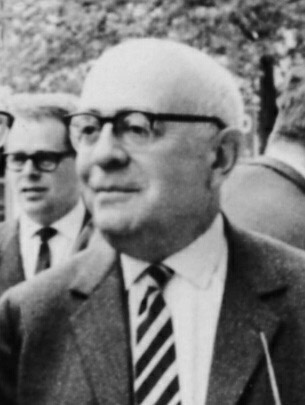
Born in Frankfurt in 1903, Theodor W. Adorno was, alongside Horkheimer, the most rigorous figure of the first generation of the Frankfurt School. Also trained in music — he studied composition in Vienna — he united philosophy, sociology, and aesthetics in a radical critique of modern society. A Jew and a Marxist, he went into exile in the United States during Nazism, where he observed mass culture at close range; he returned to Frankfurt after the war and died there in 1969.
With Horkheimer, Adorno formulated the critique of instrumental reason (Dialectic of Enlightenment, 1947): the very reason that, in the Enlightenment, had promised to free humanity from myth had turned into pure calculation of means, indifferent to ends — preparing the ground for totalitarian domination and barbarism. To this diagnosis is joined the concept of the culture industry: under capitalism, art and entertainment become standardized commodities that produce conformism and administer even leisure time.
Philosophically, Adorno proposes a negative dialectics: against Hegel, he refuses the reconciling synthesis, for reality is not rational, and the concept never exhausts the object — there always remains an excess, non-identity, which thought must preserve. Hence the central place of authentic art (the music of Schönberg, the literature of Beckett and Kafka), able to give voice to what the system silences. His statement that “to write poetry after Auschwitz is barbarism” — later qualified by Adorno himself — became an emblem of the tragic consciousness of the twentieth century. His influence shaped cultural studies, aesthetics, and Habermas.
Key Concepts
- Negative Dialectics: refuses the Hegelian synthesis of reconciliation; reality is not rational; the object always exceeds the concept → defense of non-identity and particularity
- Instrumental Reason (with Horkheimer): reason that calculates means without questioning ends — basis of totalitarianism and capitalism
- Culture Industry: mass culture (cinema, TV, radio) produces conformism; “free time” is administered like work
- “To write poetry after Auschwitz is barbarism” — yet art remains necessary as antithesis to society
- Authentic art (Schönberg, Beckett, Kafka) preserves non-identity
Influenced by
- Hegel — dialectics (but inverts the synthesis)
- Marx — critique of capitalism
- Nietzsche — critique of culture
- Freud — social unconscious
- Walter Benjamin — collaborator
Influenced
- Contemporary critical theory
- Cultural studies
- Philosophy of music and aesthetics
Works
Dialectic of Enlightenment (1947, with Horkheimer); Negative Dialectics (1966); Aesthetic Theory (1970, posthumous); Minima Moralia (1951).
See also
Twentieth-Century Philosophy