Imagine a world where everything that happens — a storm, a failed harvest, a child being born — is explained by the will of some god. For millennia, humanity lived within this mythical vision of the cosmos. Then, around the 6th century BC, in a small coastal city of Asia Minor called Miletus, something extraordinary happened: a group of thinkers decided to ask why without appealing to the gods.
This shift — from mythos to logos, from myth to reason — is one of the most decisive moments in human intellectual history. The men who played a leading role in this transformation are called pre-Socratics: the philosophers who preceded Socrates and founded, with their bold questions, the Western philosophical tradition.
Why “Pre-Socratics”?
The term is late — popularized in the early 20th century by classical philologist Hermann Diels (Die Fragmente der Vorsokratiker, 1903) — and is geographically imprecise: these thinkers lived in Greek colonies scattered across the Mediterranean, from Ionia (modern Turkey) to Sicily, passing through Magna Graecia (southern Italy). But the name stuck, and for good reason: it marks a real philosophical boundary. Before Socrates, the central question was cosmological — what is the universe made of and how does it work? With Socrates, the focus shifts to the human being and ethics — how should I live?
The pre-Socratics are not, therefore, a homogeneous group. They are thinkers from different schools and traditions, often in conflict with each other. What unites them is the search for the arché (ἀρχή): the originating principle, the fundamental substance or rational law that explains the existence of everything.
The Context That Made Everything Possible
Greece of the 6th century BC was undergoing a profound social transformation. The poleis (city-states) had replaced the ancient kingdoms. Maritime trade connected different cultures — Egyptian, Babylonian, Persian. The invention of coinage created an abstract economy that demanded new forms of reasoning. Alphabetic writing popularized public debate. And the political structure of the cities, especially Athens, introduced the idea that arguments should be judged by their logical strength, not by the authority of who utters them.
Miletus in particular was one of the richest and most cosmopolitan cities in the Greek world. Milesian merchants knew Egyptian geometry, Babylonian astronomy, the natural observations of Eastern peoples. This contact with practical knowledge sharpened a question: if the Egyptians explain the flooding of the Nile one way and the Babylonians explain eclipses another way, who is right? And could there be a general explanation, valid regardless of which god one worships?
It is in this cultural crucible that philosophy is born.
The School of Miletus: The First Generation
Thales of Miletus (~624–546 BC)
Thales is the name that inaugurates the tradition. Aristotle, our main source, calls him “the first to investigate this kind of cause” (Metaphysics I, 3). We have none of his works — everything we know comes from later accounts.
His fundamental thesis: the arché is water. Not the water we drink, but a primordial, humid principle from which everything emerges and to which everything returns. The earth floats on water; earthquakes are undulations of this primordial ocean.
Why water? Probably for empirical reasons: the seed of everything is moist; the food of everything contains moisture; even heat seems to be generated by it. Water is necessary to life and appears in three states — solid, liquid, gaseous. Thales was trying to find a unitary principle that explained the diversity of things — and water seemed a good candidate.
The gesture is revolutionary: for the first time, a thinker replaces Zeus hurled a lightning bolt with this phenomenon has a natural cause that I can investigate.
Anaximander (~610–546 BC)
Thales’s disciple, Anaximander took a more radical step. If the arché is water, this raises a problem: water is cold and moist. But fire and heat also exist. How can a determinate principle generate its own opposite?
Anaximander’s solution: the arché cannot be any determinate thing. It must be the ápeiron — the indefinite, the unlimited, that which has no specific quality. The ápeiron is eternal, divine, and contains all opposites in potentiality. From the ápeiron the contraries separate — hot and cold, dry and moist — which generate worlds. And after existing, beings return to the ápeiron as expiation for the injustice of their separate existence.
This fragment by Anaximander is the first philosophical sentence preserved in Western tradition:
“Things give penalty and retribution to each other for their injustice according to the order of time.”
There is here a surprisingly modern intuition: the universe operates according to an impersonal law, not by divine caprice. And an almost Buddhist vision that individual existence is a kind of debt to the Whole.
Anaximenes (~585–525 BC)
The third Milesian returns to the idea of a determinate arché, but chooses air instead of water. Air permeates everything; it is what we breathe, and without breathing there is no life. More importantly, Anaximenes developed a precise physical mechanism to explain how air generates all things — by condensation and rarefaction.
Rarefied air → fire. Condensed air → wind → cloud → water → earth → stone. With a single principle and two opposite processes, Anaximenes described a coherent and mechanical cosmos. This model of qualitative transformation through quantitative variation will influence all subsequent physics, up to our contemporary models of states of matter.
Pythagoras and the Pythagoreans (~570–495 BC)
Pythagoras of Samos founded a philosophical school in Croton, in southern Italy, that was simultaneously an intellectual community and a religious brotherhood. The Pythagoreans believed in metempsychosis — the transmigration of souls between bodies — and saw mathematics as the path to the soul’s purification.
For Pythagoras, the arché is number. But not in the sense that everything is number — rather that everything has numerical structure. The discovery that musical harmonies correspond to simple numerical ratios (do and sol are in the relation 2:3) was a moment of revelation: the cosmos is ordered mathematically.
The Pythagoreans developed geometry, music theory, arithmetic and astronomy as interrelated disciplines — what the Middle Ages would call the quadrivium. Their influence on Plato is decisive: Plato’s theory of Forms owes much to Pythagorean thought.
Two central concepts of Pythagorean physics:
- Limit and unlimited: the cosmos is born from the imposition of limit (form, number) upon the unlimited (formless matter)
- Harmony of the spheres: the heavenly bodies as they revolve produce a music that we cannot hear because we have been accustomed to it since birth
Heraclitus of Ephesus (~535–475 BC): The Philosopher of Flux
Solitary, obscure, aristocratic and provocative — Heraclitus wrote aphorisms that seemed deliberate riddles. Antiquity called him ho Skoteinos, “the Obscure.” But behind the obscurity lies a thought of extraordinary coherence.
His arché: fire. But more than a substance, fire is for Heraclitus a metaphor for process: everything is in constant transformation, nothing is fixed.
“You cannot step into the same river twice, for new waters are always flowing.” (Fragment 91)
Hence the famous panta rhei (“everything flows”) — although this specific expression does not appear in the preserved fragments. The world is not a thing, but a continuous event.
Heraclitus’s deepest insight, however, is his logic of opposites: contraries do not exclude each other, but mutually imply each other. The road that goes up and the one that goes down are the same. Day and night are faces of the same process. The bow (biós) has the name of life, but its function is death. The tension between opposites — like the tension in the strings of a bow or a lyre — is what holds the world together.
Governing all of this is the Logos — reason, law, the discourse that structures the cosmos. Men live as if asleep, without perceiving the Logos that rules all things. The philosopher is the one who awakens to this universal law.
Heraclitus’s influence is immense: in Hegel’s dialectical logic, in Marx’s historical materialism, in quantum physics (where particles are events, not objects), there are echoes of the “Obscure” of Ephesus.
The Eleatic School: The Motionless Being
At the opposite pole from Heraclitus, the Eleatics argued that motion and change are illusions of the senses. Reason reveals an eternal, motionless, one and perfect being.
Xenophanes (~570–475 BC)
Before reaching the Eleatic core, it is necessary to mention Xenophanes, a poet-philosopher of Colophon who created a devastating critique of polytheism:
“The Ethiopians say that their gods are snub-nosed and black; the Thracians say that their gods have blue eyes and red hair. If oxen and horses had hands and could draw as men do, horses would draw the gods with horse-like forms.” (Fragments 15-16)
Xenophanes proposes a single god, totally different from mortals — eternal, motionless, who governs everything through thought. It is one of the first philosophical monotheisms in history.
Parmenides of Elea (~515–450 BC)
Parmenides is perhaps the most radical thinker of all pre-Socratic philosophy. His poem On Nature presents two paths: that of truth (guided by reason) and that of opinion (guided by the senses).
By reason, we arrive at a necessary conclusion: “being is; non-being is not.”
What does this imply? If being exists, it cannot have begun — because before it there would only be non-being, which does not exist. It cannot end — for the same reason. It cannot move — because to move it would need to occupy a place it currently does not occupy, i.e., a place that is “non-being.” It cannot have distinct parts — for what would separate one part from another would be the void, non-being, which does not exist.
Conclusion: being is eternal, motionless, homogeneous, unique and spherical (the sphere as a symbol of perfection).
But what about the world we perceive, with its colors, movements, changes? They are appearances, illusions produced by the deceiving senses. True reality is the one and motionless Being.
This argument seems absurd at first glance — but have you tried to refute it logically? Parmenides laid the foundations of Western ontology (the study of being as being) and forced all subsequent philosophy to respond to his challenge.
Zeno of Elea (~490–430 BC)
Parmenides’s disciple, Zeno became famous for his paradoxes — arguments constructed to demonstrate that motion is logically impossible, using the technique of reductio ad absurdum.
The paradox of Achilles and the tortoise: Achilles gives the tortoise a 100-meter head start in a race. When Achilles covers those 100 meters, the tortoise has advanced 10. When Achilles covers those 10, the tortoise has advanced 1. And so on infinitely — Achilles never catches the tortoise, because there is always a distance remaining, however small.
The arrow paradox: An arrow in motion occupies, at each instant, a space equal to its own size — i.e., it is at rest at each instant. If it is at rest at each instant, how can it be in motion?
These paradoxes seemed like sophisms until 19th-century mathematicians (Cauchy, Weierstrass) rigorously grounded infinitesimal calculus with the theory of limits — and realized that Zeno had intuited real problems with continuity, infinity and the divisibility of space and time. Zeno’s paradoxes continue to be debated today in physics and the philosophy of mathematics.
The Pluralists: A Response to Parmenides
Parmenides’s challenge was too serious to ignore. How to explain the multiple and changing world we perceive, if being is one and motionless? The pluralists responded: we accept that being cannot be born or perish — but they propose several eternal principles that combine in diverse ways.
Empedocles (~490–430 BC)
Empedocles, from Agrigento in Sicily, was one of the most extraordinary figures of Antiquity: philosopher, poet, physician, politician and — it was said — magician. His solution to the problem of Parmenides: there are four eternal and immutable principles, which he called rizomata (roots) — earth, water, fire and air.
These four elements are incorruptible and eternal (satisfying Parmenides). Everything that exists is a combination of them in varying proportions. A stone, a bone, a god — are different mixtures of the same four elements.
But what makes the mixtures? Two opposing cosmic forces: Love (philia), which unites and aggregates, and Strife (neikos), which separates and disperses. The cosmos passes through eternal cycles: when Love dominates, everything fuses into a single being; when Strife dominates, the four elements completely separate. The world we inhabit is in an intermediate state, in constant alternation.
Empedocles also developed a rudimentary theory of evolution: in the first stages of the cosmos, monstrous combinations arose — heads without necks, arms without shoulders, eyes without faces. Only functional combinations survived. This is a remarkable intuition of what Darwin would systematize 2,400 years later.
Anaxagoras (~500–428 BC)
Anaxagoras was the first philosopher to live in Athens, where he associated with Pericles and Euripides. He paid dearly for his intellectual boldness: he was accused of impiety for claiming that the Sun was not a god but an incandescent stone larger than the Peloponnese, and ended up exiled.
His response to Parmenides: there are not four elements, but infinite principles — the homeomeries (Aristotle’s term) or, in Anaxagoras’s own language, seeds (spermata). Each thing contains parts of all other things. In bone there is flesh, in gold there is silver, in fire there is moisture — in infinitesimal proportions. What a thing is depends on what predominates in it.
“In everything there is a portion of everything.”
More importantly, Anaxagoras introduced the Nous — the Intelligence or cosmic Mind — as the only separate and pure principle. Nous is not mixed with anything; it is what initiated the primordial rotational movement that generated the cosmos. It is infinite, self-sovereign, omniscient.
Plato, in the Phaedo, recounts that Socrates grew excited reading Anaxagoras: “if Intelligence orders everything, it orders each thing for the best!” But he was disappointed: Anaxagoras used the Nous only to give the first impulse and then explained everything mechanically. This disappointment of Socrates points to a tension that runs through all of philosophy: mechanical explanation versus teleological explanation (by purposes).
Atomism: Leucippus (fl. ~440 BC) and Democritus (~460–370 BC)
The most audacious synthesis of pre-Socratic thought was atomism, developed by Leucippus and his disciple Democritus of Abdera. Their central thesis: everything that exists is atoms (átomos = indivisible) and void.
Atoms are solid, indivisible, eternal particles, with no quality other than shape, size and position. They differ from each other only geometrically — as the letters of the alphabet differ in shape but not in matter. The void, contrary to Parmenides, exists — it is the space where atoms move.
The movement of atoms is eternal and necessary. No god, no Nous, no purpose governs the cosmos: atomic combinations are mechanical and causal. From collisions and aggregations of atoms arise all objects, all worlds — and there is an infinity of worlds, some inhabited, others not.
What we call qualities — color, flavor, odor, heat — do not exist “in things”; they are effects of the interaction of certain types of atoms with our sense organs. Honey is not “sweet in itself”; it is sweet for us. Qualities are conventional, atoms are real.
“By convention (there is) the sweet, by convention the bitter, by convention the hot, by convention the cold, by convention color; in reality (there are only) atoms and void.” (Democritus, Fr. 9)
This materialist atomism has a fascinating genealogy: it was developed by Epicurus in the late 4th and early 3rd century BC, transmitted to the Roman world by Lucretius in the poem De Rerum Natura, almost lost during the Middle Ages, rediscovered in the Renaissance, and became the basis of modern physics — from Galileo and Dalton to quantum physics. The influence of classical atomism on modern chemistry, from Boyle and Newton through Dalton, has been traced by historians of science.
The Legacy: Why the Pre-Socratics Still Matter
The pre-Socratics did not arrive at definitive conclusions. They proposed theories that frequently contradict one another. They had no precision instruments, no laboratories, no advanced mathematics. And yet their legacy is immense.
Methodological legacy: they introduced the idea that the world can be explained by natural principles, investigated by reason, and that these explanations can be criticized, debated and improved. This is the foundation of science.
Conceptual legacy: concepts such as arché, logos, atom, void, nous, being and non-being are not relics — they are the conceptual building blocks of Western philosophy and science. When a physicist speaks of an “elementary particle,” they are echoing Democritus. When a logician distinguishes being and nothing, they are responding to Parmenides. When a philosopher speaks of a rational principle of the cosmos, they are in the tradition of Heraclitus.
Philosophical legacy: Plato developed his theory of Forms in dialogue with the pre-Socratics. Aristotle, in the first books of the Metaphysics, makes a critical inventory of all of them before proposing his own physics. The Stoics were inspired by Heraclitus. The Epicureans adopted atomism. And, in modernity, Nietzsche — who was a professor of classical philology — considered Heraclitus the greatest philosopher of all time.
Existential legacy: there is something profoundly contemporary about the fundamental pre-Socratic question. We live in an era where the religious answer to the universe does not satisfy everyone, but the purely technical-scientific answer also seems insufficient to give meaning to existence. The pre-Socratics show that it was possible — and can be again — to seek a rational and integrated understanding of the cosmos that does not divorce the physical from the metaphysical, the how from the why.
Conclusion: Wonder as Origin
Aristotle said that philosophy begins with thaumazein — wonder, admiration. The pre-Socratics were those who, faced with a cosmos explained by myths, felt this wonder with sufficient intensity to refuse ready-made answers and begin to ask again, from scratch.
Thales in saying “it is water” was not affirming a definitive truth; he was inaugurating a method: observe, abstract, propose a principle, defend with arguments. Parmenides in saying “being is” was not being absurd; he was pushing logic to its extreme consequences and forcing everyone to think more rigorously. Heraclitus in saying “everything flows” was not being nihilistic; he was describing reality with more precision than those who believed in a fixed world.
Studying the pre-Socratics is revisiting the childhood of Western thought — not as archaeology, but as a living exercise. It is learning that the greatest intellectual revolutions begin with the courage to ask what everyone presumes to know.
Recommended Reading
For those who want to delve deeper into the pre-Socratics, the original fragments are compiled in the monumental work by Hermann Diels and Walther Kranz, Die Fragmente der Vorsokratiker (1903). In English:
- W. K. C. Guthrie — A History of Greek Philosophy, vol. 1-2 (Cambridge): academic reference
- Jonathan Barnes — The Presocratic Philosophers (Routledge): sharp philosophical analysis
- G. S. Kirk, J. E. Raven and M. Schofield — The Presocratic Philosophers (Cambridge): bilingual edition with commentary
- Giovanni Reale — A History of Ancient Philosophy, vol. 1 (SUNY Press): didactic and rigorous
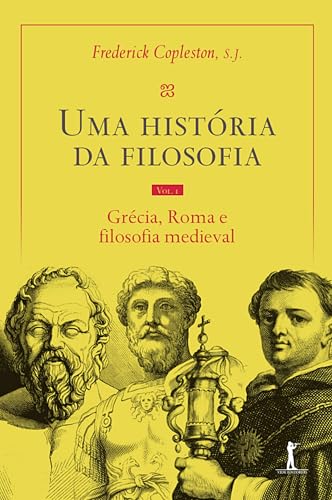 Uma História Da Filosofia - Vol. I - Grécia
Ver na Amazon →
Uma História Da Filosofia - Vol. I - Grécia
Ver na Amazon →← Articles