Friedrich Nietzsche died in 1900, yet he seems to have written his books for the twenty-first century. The German philosopher who proclaimed “God is dead” was not celebrating — he was issuing a bleak diagnosis of what happens when an entire civilization loses the foundation that organized its values. In today’s world, that diagnosis resonates with unsettling precision: we live in an era of meaning crisis, of collapsing values, of diffuse nihilism concealed beneath layers of digital entertainment, social media, and consumerism. Nietzsche did not merely predict this scenario — he described in detail what was coming.
Who Was Nietzsche?
Friedrich Wilhelm Nietzsche was born in 1844 in Röcken, Saxony, the son of a Lutheran pastor who died when Friedrich was only four years old. He studied classical philology in Leipzig and proved so brilliant that he was offered a professorship at the University of Basel before he had even completed his doctorate — at just twenty-four years of age. A close friend of Richard Wagner and a passionate reader of Schopenhauer in his youth, he broke with both as he found his own philosophical path.
His intellectual output was explosive and brief: between 1872 and 1888, he published works that would transform Western thought — The Birth of Tragedy, Human, All Too Human, The Gay Science, Thus Spoke Zarathustra, Beyond Good and Evil, On the Genealogy of Morality, and Twilight of the Idols. In 1889, he suffered a mental collapse in Turin from which he never recovered, spending the last eleven years of his life in profound mental incapacity, first under the care of his mother, Franziska, and then of his sister, Elisabeth. He died in 1900, unaware of the scale of the revolution he had unleashed.
What Is Nihilism in Nietzsche?
The word “nihilism” comes from the Latin nihil — nothing. Popularized in Russia by Turgenev’s novel Fathers and Sons (1862), the term originally designated young radicals who rejected all authority. Nietzsche appropriates the concept and deepens it in a radical way.
For Nietzsche, nihilism is not simply the position of one who says “nothing has value.” It is something far more insidious: it is the condition of a culture that has lost its fundamental values but has not yet created new ones. It is the unresolved grief of a civilization that has killed its own gods.
“God Is Dead”
Nietzsche’s most famous line appears in The Gay Science (1882), in the parable of the Madman:
“God is dead! God remains dead! And we have killed him! How shall we comfort ourselves, the murderers of all murderers? What was holiest and mightiest of all that the world has yet owned has bled to death under our knives.”
It is crucial to understand: Nietzsche is not celebrating. The Madman runs through the marketplace in broad daylight carrying a lantern, searching for God — and is met with laughter and mockery. When he proclaims the death of God, the crowd does not grasp the gravity of what it has heard.
“God is dead” is not a theological statement about the existence of God. It is a cultural and historical claim: belief in God — and in the Platonic-Christian moral system that had sustained all of Western civilization — has lost its force. Science, the Enlightenment, historical criticism of the Bible, the development of secular philosophy: all of this together had undermined the foundations on which European culture anchored its values.
The problem, says Nietzsche, is that Europeans killed God but kept on living as though He still existed. They remained attached to Christian values — compassion, equality, humility — but without the metaphysical foundation that justified them. This is unstable. Eventually, the ground will give way.
The Three Forms of Nihilism
Nietzsche distinguishes different forms of nihilism, and the distinction is fundamental:
1. Passive nihilism (weak nihilism) This is the nihilism of despondency, of resignation, of what Nietzsche calls décadence. The passively nihilistic subject perceives that the old values have lost their meaning, but instead of creating new ones, collapses into indifference, pessimism, or empty entertainment. It is the nihilism of the consumer who fills the existential void with shopping, of the user who endlessly scrolls a feed in search of a dopamine hit, of the intellectual who adopts cynicism as a permanent stance. Nietzsche identified this nihilism with Schopenhauerian Buddhism — the negation of the will, the escape from suffering through the dissolution of desire.
2. Active nihilism (strong nihilism) This is a necessary but dangerous phase: the deliberate destruction of the old values. The active nihilist does not retreat — he uses the hammer to demolish the idols. Nietzsche sees here a potentially creative energy, but one that must be overcome, not cultivated as an end in itself. Active nihilism is a moment of rupture, not of arrival.
3. The overcoming of nihilism: the Übermensch Nietzsche’s answer to nihilism is neither a new moral system nor a new religion. It is the creation of values — the radical act through which the individual, by means of the will to power, overcomes nihilism and affirms life in its totality, including its suffering. The being Nietzsche calls the Übermensch (overman, superhuman) is not a biologically superior creature — it is one capable of creating meaning in the face of a universe that offers none.
The Slave Morality and the Transvaluation of Values
To understand the value crisis that Nietzsche diagnoses, one must engage with his On the Genealogy of Morality (1887). Nietzsche undertakes an archaeology of ethics: where do the moral values we take for granted actually come from?
His answer is unsettling. There were originally two types of morality:
Master morality: created by the Greek aristoi — the strong, the noble, the creators. In it, “good” means noble, powerful, affirmative. “Bad” (schlecht) is merely its opposite: the weak, the cowardly, the mediocre. There is no resentment — it is a morality of affirmation.
Slave morality: born of the resentment of the weak against the strong. The slaves — in a symbolic, not racial, sense — could not act, so they reacted through thought. They invented a value system in which weakness became virtue: humility, patience, compassion, obedience. And they recast the strength of the masters as vice: pride, cruelty, ruthlessness.
For Nietzsche, Christianity was the historical vehicle of this inversion. “Love thy neighbor,” “equality before God,” “blessed are the meek” — all of this is, in the Nietzschean reading, the revenge of the weak institutionalized as a universal moral system.
The critical point: when this morality loses its metaphysical foundation — when God dies — what remains? A value system that no one can any longer justify, yet that everyone continues to practice out of habit, fear, or conformity. It is a house without foundations — standing through inertia, but on the verge of collapse.
The Eternal Return: The Heaviest of Questions
Another central concept in Nietzsche’s engagement with nihilism is the eternal return — the idea that everything that exists has already repeated itself infinitely and will recur for all eternity.
Nietzsche does not present this as scientific cosmology, but as an existential thought experiment. The question is: if you knew that you would have to live this same life — with every joy, every suffering, every mundane detail — infinitely, would you say yes? Would you affirm your existence?
For the nihilist, the answer is no. Life is suffering, absurdity, meaningless repetition. For the Übermensch — the one who has overcome nihilism — the answer is yes: amor fati, love of fate. To accept and affirm life in all its contingency and finitude.
The eternal return is the supreme test of nihilism: are you so full of resentment and negation of life that you could not bear to live it again? Or do you affirm it with such intensity that you would wish it to repeat forever?
2026: The Symptoms of Contemporary Nihilism
Translating Nietzsche into the present requires care — he is not an oracle to be applied mechanically. But the patterns he identified are too recognizable to ignore.
1. The Death of God and the Digital Crisis of Meaning
In 2026, the Nietzschean “death of God” manifests in a form Nietzsche could not have anticipated, but would certainly recognize: the crisis of meaning in the digital age.
The pews have emptied — not only in churches, but in secular institutions. Political parties have shed members. Universities are questioned. The grand narratives — progress, nation, science as salvation, ideology as compass — are under widespread suspicion. In their place has emerged passive nihilism in its purest form: the infinite scroll.
Social media platforms — TikTok, Instagram, X (formerly Twitter), YouTube Shorts — are, in the Nietzschean reading, the institutionalization of passive nihilism. They offer stimulation without meaning: microbursts of dopamine that fill the existential void without resolving it. The absence of a life project, of authentic values, of a coherent personal narrative — all of it anesthetized by the next video, the next notification, the next controversy to be consumed for forty-eight hours before being discarded.
Nietzsche would call this the last man — the most pessimistic concept in Thus Spoke Zarathustra. When Zarathustra descends from the mountain to speak of the Übermensch, the crowd laughs and asks for the last man instead: the one who has invented happiness, who blinks, who is lukewarm, who neither creates nor destroys, who merely consumes and survives.
“What is love? What is creation? What is longing? What is a star?” — thus asks the last man, and blinks.
In 2026, the last man has a smartphone.
2. Resentment and Cancel Culture
Nietzsche’s Genealogy of Morality describes resentment (ressentiment) as the founding emotion of slave morality: the deferred revenge of those who cannot act, which transforms itself into a value system.
Contemporary cancel culture — the phenomenon by which public figures are publicly destroyed for past statements, associations, or membership in groups deemed guilty — has a structure that Nietzsche would analyze as institutionalized resentment.
This is not to say that all criticism is resentment, or that injustices do not exist. It is to identify a specific dynamic: the energy driving cancellation is often not the pursuit of redress or change — it is the pleasure of destruction, the vicarious relief of watching the powerful fall. It is slave morality with a distribution algorithm.
Nietzsche would see here not the creation of new values, but the negation of others’ values as a substitute for creating one’s own. Destroying the idol does not create anything new. It is active nihilism that never advances to creation — trapped in resentment.
3. Populism and the Value Vacuum
When traditional values collapse without new ones being created, a vacuum emerges. And in that vacuum, those most skilled at exploiting resentment seize power.
Contemporary populism — on both the left and the right — feeds precisely on the nihilism Nietzsche described. It does not offer new values: it offers an enemy. “The people” against “the elites.” “Workers” against “globalists.” “The nation” against “the others.” It is slave morality transposed into politics: identity is not built by what one creates, but by what one rejects and what one hates.
In 2026, this dynamic has intensified with the proliferation of algorithms designed to maximize engagement — and maximum engagement does not come from nuance, creation, or affirmation, but from conflict, resentment, and outrage. Digital platforms have become resentment machines operating at industrial scale.
Nietzsche would say that populism is not the answer to nihilism — it is one of its most virulent symptoms.
4. The Tyranny of “Authenticity”
There is a cruel irony in contemporary culture: we live in an obsession with “authenticity” — be authentic, be yourself, live your truth — while the performance pressures of social media create one of the most theatrical environments in human history.
For Nietzsche, authenticity is not an essence to be discovered within oneself. It is a creation — the Übermensch does not find his values: he forges them. The idea that there is an “authentic self” waiting to be revealed is, for Nietzsche, still a survival of Christian metaphysics: the immutable soul, the core identity given by God.
The “authenticity” of Instagram — the filter that looks unfiltered, the vulnerability calculated to generate engagement, the “real self” performed for thousands of followers — is the exact opposite of the creation of values that Nietzsche proposes. It is the last man convinced that blinking is individuality.
5. The Nihilism of Consumerism
In The Gay Science, Nietzsche anticipated that, without the values religion had provided, human beings would try to fill the void in other ways — pleasure, comfort, distraction. Contemporary consumerism is that attempt, fully institutionalized.
The consumption cycle — working to buy what one does not need in order to impress people one does not know — is, from the Nietzschean perspective, passive nihilism with a credit card. It is not an affirmation of life: it is a flight from the confrontation with the question of meaning. It is the lukewarm existence of the last man, dressed up as freedom of choice.
In 2026, consumerism has grown even more sophisticated: it sells experiences, identities, values. Buying the right brand means being on the right side. Consuming the sustainable product means being virtuous. The market has colonized even the language of value creation — and turned it into market segmentation.
The Will to Power as Antidote
It would be unfair to Nietzsche to reduce his thought to a diagnosis of disaster with no way out. He was not a pessimist — he was a physician of culture who insisted that there was a cure, however painful.
The will to power (Wille zur Macht) is frequently misunderstood as the will to dominate others — a reading that Nietzsche’s sister, Elisabeth, deliberately cultivated to align her brother with Nazism (an intellectual dishonesty that cost decades of distorted interpretation). In truth, the will to power is, above all, the will to self-overcoming — the creative impulse that drives life beyond its own limits.
For Nietzsche, the antidote to nihilism is not to find a new set of ready-made values to consume. It is to develop the capacity to create values — to live in such a way that life itself becomes a work of art. This is what he calls great health: the strength to bear the absence of metaphysical certainties without collapsing into passive nihilism, and without consoling oneself with false certainties.
In contemporary terms, the Nietzschean will to power would be visible in those who refuse both digital conformism and populist resentment — those who build projects, cultivate deep commitment, face suffering without fleeing it, forge real bonds, develop rigorous thought. It is neither a political program nor a self-help manual. It is a radical existential orientation: saying yes to life in its totality, including its tragic dimension.
The Übermensch in 2026: A Real Possibility?
Nietzsche was an elitist in the philosophical sense: he did not believe that everyone would be capable of overcoming nihilism. The Übermensch is not a democratic promise — it is an ideal for the few who refuse to become the last man.
But what would the Übermensch look like in 2026? Not the Nietzschean superhero distorted by Nazism — there is no superior race here, no violent conquest. The contemporary Übermensch would be one capable of:
- Creating deep commitment in a world of infinite distraction
- Taking responsibility for one’s own meaning in a culture that outsources this to algorithms and influencers
- Bearing uncertainty without reaching for political or religious fanaticism as anesthesia
- Loving fate (amor fati) — including limitations, failures, and finitude — rather than sinking into resentment or denial
- Creating values that affirm life instead of merely negating the values of others
This is not an easy task. Nietzsche never said it would be. But it is, for him, the only honest response to the problem he identified with greater precision than any other philosopher of the nineteenth century.
Nietzsche Still Unsettles Us — and That Is Why He Is Still Necessary
The reason Nietzsche continues to provoke extreme reactions — uncritical adoration or visceral rejection — is that he has the indiscretion to point at what we would rather not see. That our most cherished values may be historical, contingent, driven by forces we do not acknowledge. That comfort may be a form of flight. That the equality we preach may conceal resentment. That nihilism is not an intellectual pose — it is the default condition of a culture that has lost its foundations and has not yet built new ones.
In 2026, all these questions are on the table — even when we would prefer not to look at them. The infinite scroll, the rage-fueled populism, the search for performative authenticity, the existential consumerism: these are symptoms. Nietzsche is not the cure — but he remains a diagnosis that hurts precisely where it needs to.
And perhaps that is what he expected of us: not that we follow his answers, but that we have the courage to face the questions.
Recommended Reading
For those who want to go further, the essential Nietzsche texts on nihilism are:
- The Gay Science (1882) — especially aphorism 125, the Madman
- Thus Spoke Zarathustra (1883–85) — the Übermensch, the eternal return, the last man
- Beyond Good and Evil (1886) — the critique of traditional morality
- On the Genealogy of Morality (1887) — the archaeology of moral values
- Twilight of the Idols (1889) — philosophy with a hammer
For a rigorous secondary introduction, Walter Kaufmann’s Nietzsche: Philosopher, Psychologist, Antichrist remains the best antidote to distorted readings of Nietzschean thought.
Recommended Books:
 The Gay Science: With a Prelude in Rhymes and an Appendix of Songs
Ver na Amazon →
The Gay Science: With a Prelude in Rhymes and an Appendix of Songs
Ver na Amazon →
 Thus Spoke Zarathustra: A Book for Everyone and No One
Ver na Amazon →
Thus Spoke Zarathustra: A Book for Everyone and No One
Ver na Amazon →
 Beyond Good and Evil
Ver na Amazon →
Beyond Good and Evil
Ver na Amazon →
 On the Genealogy of Morals: A Polemic
Ver na Amazon →
On the Genealogy of Morals: A Polemic
Ver na Amazon →
 The Twilight of the Idols and the Anti-Christ: Or How to Philosophize with a Hammer
Ver na Amazon →
The Twilight of the Idols and the Anti-Christ: Or How to Philosophize with a Hammer
Ver na Amazon →
 A gaia ciência
Ver na Amazon →
A gaia ciência
Ver na Amazon →
 Biblioteca Nietzsche Essencial - 4 Livros
Ver na Amazon →
Biblioteca Nietzsche Essencial - 4 Livros
Ver na Amazon →
 Assim falou Zaratustra
Ver na Amazon →
Assim falou Zaratustra
Ver na Amazon →
 Além do bem e do mal
Ver na Amazon →
Além do bem e do mal
Ver na Amazon →
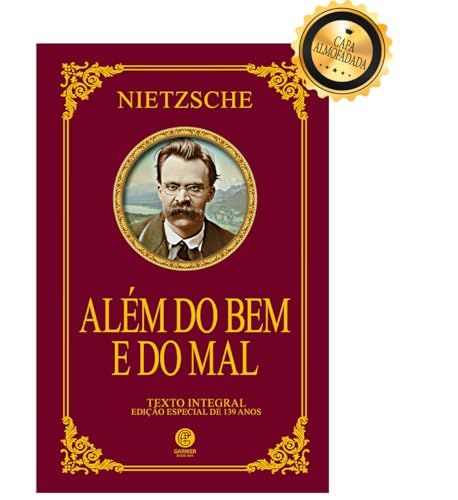 Além do Bem e do Mal - Edição de Luxo Almofadada
Ver na Amazon →
Além do Bem e do Mal - Edição de Luxo Almofadada
Ver na Amazon →
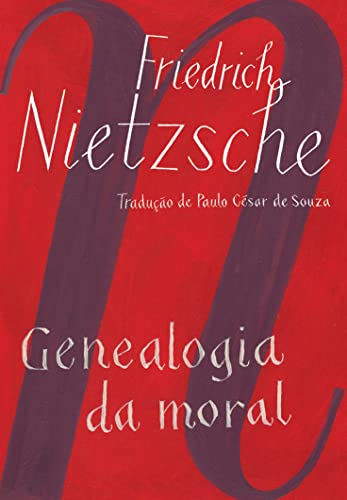 Genealogia da moral
Ver na Amazon →
Genealogia da moral
Ver na Amazon →
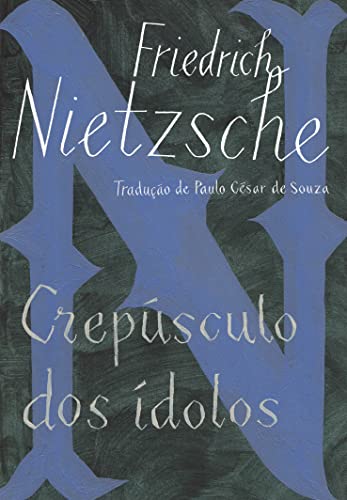 Crepúsculo dos ídolos
Ver na Amazon →
Crepúsculo dos ídolos
Ver na Amazon →← Articles