This is the fifth and final article on Joseph Maréchal’s Le point de départ de la métaphysique (The Starting Point of Metaphysics). We have traced the full arc of Maréchal’s historical project: from the ancient Greek tradition and Scholasticism (Cahier I), through the rationalist-empiricist conflict (Cahier II), into the depths of Kant’s critical philosophy (Cahier III), and through the analysis of post-Kantian idealism from Fichte through Schelling to Hegel (Cahier IV). In this fifth article, we arrive at Cahier V — Le thomisme devant la philosophie critique — the heart of the work, published in 1926 — where Maréchal undertakes a systematic comparison of Thomism with critical philosophy and presents his own original philosophical argument: that intellectual dynamism toward Absolute Being is a transcendental condition of the very possibility of knowledge, and that a genuine metaphysics of being is therefore not merely defensible but philosophically necessary.
The Central Wager of Cahier V
Every great philosophical project has a central wager — a foundational bet about where the truth lies and how it can be reached. Maréchal’s wager in Cahier V is this: that the problem Kant left unresolved — the question of whether reason’s drive toward the Unconditioned is merely regulative or genuinely constitutive — can be answered from within the transcendental analysis of knowledge itself, and that the answer is one that vindicates the metaphysical tradition Kant thought he had closed off.
Maréchal’s strategy is to show that every act of knowledge, analyzed at its deepest level, carries within itself an implicit affirmation of Absolute Being — not as an external object reached by a leap beyond experience, but as the horizon that makes the act of knowing possible in the first place. If this argument succeeds, then metaphysics is not an illegitimate extension of the categories beyond their proper domain (as Kant maintained) but the explicit articulation of what is already implicitly operative in every cognitive act.
The argument is demanding, but its core can be stated with relative clarity. Let us reconstruct it step by step.
Every Act of Knowledge is a Judgment
The first premise is a thesis shared by Aquinas and Kant: the paradigmatic act of knowledge is the judgment. To know something is not merely to form a concept of it — concepts alone, as both traditions agree, can be empty or merely possible. To know is to judge: to affirm (or deny) that something is the case. The judgment “this stone is hard” or “this action is unjust” is not a mere association of ideas; it is an assertion about reality, a commitment to how things actually are.
This primacy of judgment over simple apprehension is fundamental to Maréchal’s argument. The judgment is the act in which cognition reaches its fullest expression — the act in which the mind takes a definite stand with respect to reality. All analysis of knowledge must, therefore, ultimately be analysis of the judgment.
Every Judgment is an Affirmation of Being
The second step moves from judgment to being. When the intellect judges — when it asserts “S is P” or, more fundamentally, “this is” — what is it doing? It is not merely registering a psychological state or reporting an impression; it is claiming that something is so, that reality is a certain way. The copula “is” in every affirmative judgment is not a logical glue holding concepts together; it is an assertion of esse, of actual being.
This analysis follows Thomas Aquinas closely. For Thomas, the verb “to be” (esse) in the judgment is the most fundamental philosophical term: it refers to the act by which any being is, the act that is both the source and the measure of every essence. When the intellect affirms “this is,” it reaches beyond the conceptual level to the level of esse — the act of being of the actual thing.
But Maréchal’s point goes further. It is not only that individual judgments affirm the being of individual things. Every judgment, in affirming that something is in this or that way, implicitly presupposes a horizon of being as such — a background of total intelligibility against which the particular affirmation makes sense. To say “this stone is hard” is to locate the stone within a field of being in which hardness and softness, this thing and that thing, can be distinguished and related. The particular affirmation is possible only against the background of an encompassing horizon of being.
The Horizon of Absolute Being as Condition of Possibility
This is Maréchal’s most original and philosophically decisive step: the horizon of being presupposed by every judgment is not a finite, bounded region of reality but the horizon of being in its totality — what Maréchal calls, following the Scholastic tradition, ens in communi (being in general) or, in its ultimate ground, Absolute Being.
The argument runs as follows. Every particular judgment is an affirmation that something is thus-and-so. But to make such an affirmation, the intellect must measure the particular thing against a standard of being — a criterion by which it can say “this is so” rather than “this is otherwise.” This standard cannot itself be a particular, limited being (which would simply be another object of knowledge, not the measure of all objects). It must be being itself — the fullness of intelligibility and actuality that constitutes the ultimate horizon of every cognitive act.
In Scholastic terms: the formal object of the intellect is ens in communi — being as such, being under its most universal aspect. The intellect does not first know particular beings and then generalize to “being in general”; rather, its original orientation is toward being as such, and it knows particular beings as instances of being, against that broader horizon. This orientation is what Maréchal calls the finality of the intellect: the intellect is intrinsically ordered toward being as its proper end, and every act of knowledge is a partial fulfillment of that ordering.
Now: if the formal object of the intellect is being as such, and if the intellect’s dynamism is genuinely ordered toward being in its fullness, then the complete fulfillment of that dynamism — the ultimate term of intellectual appetite — is nothing less than Absolute Being itself, the being that is not partial, limited, or mixed with non-being. For Aquinas, this Absolute Being is God: ipsum esse subsistens, subsistent being itself. For Maréchal, this means that every act of knowledge, analyzed transcendentally, carries within itself an implicit orientation toward God — not as a consciously intended object of cognition, but as the constitutive horizon that makes objective knowledge possible.
The Dynamism of the Intellect: Appetitio Naturalis Toward Esse
Maréchal names this orientation intellectual dynamism — a term that recalls both Aristotelian teleology and the Kantian drive of reason toward the Unconditioned, but that has a more specific and philosophically grounded content than either.
The dynamism is not a mere psychological tendency or a subjective desire for completeness. It is a transcendental structure — a condition of the possibility of every objective cognitive act. Maréchal argues that if the intellect were not dynamically ordered toward Absolute Being as its ultimate horizon, no particular judgment could be objectively valid: the particular affirmation of “this is hard” would lack the measure against which it could be genuinely true rather than merely a psychological occurrence. The objectivity of the judgment — its genuine reach beyond the subjective state of the knowing subject — requires the horizon of Absolute Being as its ultimate ground.
This argument is Maréchal’s most direct response to Kant. Kant asked: how is objective knowledge possible? His answer was: through the a priori forms and categories that the subject imposes on experience. But Maréchal asks: how is that answer itself possible? How can the a priori structures of the knowing subject constitute genuinely objective (not merely subjective) experience? Maréchal’s answer: only if the subject is itself dynamically ordered toward Absolute Being — only if the very structure of the knowing subject includes an orientation that reaches beyond the subject itself to a ground that transcends it.
This is not a rejection of the Kantian critical achievement; it is its deepest completion. Kant showed that the knowing subject contributes the forms and categories that structure experience. Maréchal shows that the knowing subject is itself structured by a fundamental orientation — the appetitio naturalis toward esse — that opens it onto a horizon of Absolute Being. The transcendental subject is not a closed system; it is essentially self-transcending.
The Act of Affirmation as Openness to the Absolute
A further dimension of Maréchal’s argument concerns the act of affirmation itself — the “yes” that the intellect pronounces in every positive judgment.
When the intellect affirms, it does not merely record; it commits. The affirmative act is not a passive registration of a given datum but an active taking of a stand — a claim that reality is thus-and-so, a claim that goes beyond anything that mere sensation can guarantee. This spontaneous, active character of the affirmative act is what prevents knowledge from collapsing into pure receptivity — into the Humean bundle of impressions that never achieves genuine cognitive contact with necessity.
For Maréchal, the act of affirmation is possible only because the intellect already stands in an active, dynamic relation to being — because it is already ordered toward being as its proper end and therefore capable of genuinely affirming it. The “yes” of the judgment is not an arbitrary act; it is the expression of an intellect that recognizes in the particular thing before it a genuine instance of being, measured against the horizon of being as such. The affirmation is, in its deepest structure, an act of openness to the Absolute — a partial and limited actualization of the intellect’s fundamental orientation toward esse.
The Metaphysics of Being: Not a Leap but an Explication
Maréchal’s argument allows him to rehabilitate metaphysics in a philosophically rigorous way. The objection to traditional metaphysics — Kant’s objection — was that it illegitimately extends the categories of the understanding beyond the sphere of possible experience to reach transcendent realities (God, the soul, the world as a whole). This extension, Kant argued, is a paralogism: the categories have application only within experience, and to apply them beyond experience is to generate empty and contradictory speculations.
Maréchal’s response is that a properly understood metaphysics of being does not make this illegitimate leap. It does not take the categories of the understanding and extend them to transcendent objects. Instead, it makes explicit what is already implicitly operative in every cognitive act: the orientation of the intellect toward Absolute Being as the ultimate horizon of objectivity. Metaphysics, on this account, is not a speculative flight beyond experience but a reflective explication of the conditions that make experience itself possible.
This is a genuinely transcendental argument: it moves from the fact of objective knowledge (the undeniable starting point) to the conditions of its possibility (intellectual dynamism toward Absolute Being) and then explicates those conditions as the foundation of metaphysical inquiry. The metaphysics of being is thus not a pre-critical dogmatism; it is a critically grounded ontology that emerges from within the transcendental analysis of knowledge.
Critical Evaluation: Gilson’s Objection and the Transcendental-Thomist Response
Maréchal’s synthesis attracted serious criticism from within the Thomistic tradition itself, most notably from Étienne Gilson (1884–1978), perhaps the most eminent Thomistic historian of the twentieth century.
Gilson’s objection, in essence, is that Maréchal concedes too much to Kantian immanentism — that by accepting the Kantian framework of transcendental analysis and trying to argue for metaphysics from within it, Maréchal has already accepted the premises that doom the enterprise. For Gilson, the Thomistic tradition does not need to justify itself before the bar of Kantian criticism; it begins from a more primordial and more secure starting point — the immediate givenness of being in sensible experience — that does not require transcendental justification. To accept the Kantian framing is to play on Kant’s own terms, and on those terms metaphysics is already disadvantaged.
The transcendental-Thomist response to Gilson’s objection is multifaceted but can be summarized in two points. First, the historical situation demands engagement with Kant: a Thomism that refuses to address the critical challenge simply cannot speak persuasively to the modern philosophical culture that has been shaped by Kant. Gilson’s refusal to engage may be internally coherent, but it is historically ineffective — it leaves the critical challenge unanswered. Second, and more philosophically, Maréchal’s argument does not simply accept Kantian premises; it shows that the Kantian analysis, consistently developed, leads beyond the limits Kant imposed on it. The transcendental turn, rigorously pursued, opens onto the metaphysical horizon that Kant himself refused to enter.
Whether this response fully answers Gilson is a matter of continuing philosophical debate. What is not in dispute is that Maréchal’s attempt to engage Kant seriously and to argue for a critically grounded Thomistic metaphysics was a philosophically courageous and intellectually fertile move.
The Legacy: Rahner, Lonergan, Coreth
The influence of Maréchal’s Cahier V on twentieth-century Catholic philosophy was enormous, and its effects can be traced most clearly in three major thinkers.
Karl Rahner (1904–1984), the most influential Catholic theologian of the twentieth century, was profoundly influenced by Maréchal’s work and studied directly with Martin Heidegger in Freiburg (1934–1936). In his early philosophical work Geist in Welt (Spirit in the World), Rahner developed a transcendental-Thomist epistemology in dialogue with both Maréchal and Heidegger, arguing that the human spirit is constitutively open to being (Vorgriff auf esse) — that every act of human cognition takes place against a background “pre-grasp” of being in its totality. This Vorgriff, for Rahner, is the philosophical foundation for the openness of the human spirit to the divine self-communication in grace and revelation. Maréchal’s intellectual dynamism became, in Rahner’s hands, the epistemological foundation of a systematic theology.
Bernard Lonergan (1904–1984), the Canadian Jesuit philosopher and theologian, developed an independent but structurally parallel project in his major work Insight: A Study of Human Understanding (1957). Lonergan’s “transcendental method” analyzes the invariant structure of human cognition — the operations of experiencing, understanding, judging, and deciding — and argues that this structure, when fully appropriated, leads inevitably to the affirmation of God as the unrestricted act of understanding that grounds all partial and restricted understanding. Lonergan’s approach is more empirical in style than Maréchal’s — it begins from a phenomenology of the acts of insight rather than from an abstract analysis of the judgment — but the structural logic is recognizably Maréchalian.
Emerich Coreth (1919–2006), an Austrian Jesuit philosopher, produced what is perhaps the most systematic development of Maréchal’s approach in his Metaphysik (1961). Coreth begins from the transcendental analysis of the act of questioning — the fundamental human act of asking “what?” and “is it?” — and shows that every question presupposes an unlimited horizon of being as its ultimate condition of possibility. From this analysis, Coreth constructs a metaphysics of being that is both critically grounded (answering the Kantian challenge) and substantively rich (recovering the central Thomistic doctrines of actuality, participation, and analogy).
Together, Rahner, Lonergan, and Coreth represent the maturation of the transcendental-Thomist tradition that Maréchal founded — a tradition that remained philosophically vital throughout the second half of the twentieth century and continues to generate serious work today.
What Maréchal Achieved
Looking back over the entire Le point de départ de la métaphysique, it is possible to see the coherence and ambition of Maréchal’s project with particular clarity.
He set out to show that the metaphysics of being — the conviction that human knowledge genuinely reaches being and that a philosophical science of being as being is therefore possible — is not a pre-critical naivety that must be abandoned in the face of Kant’s challenge. It is, rather, a philosophically defensible position that can be established from within the transcendental analysis of knowledge itself.
To make this case, Maréchal undertook one of the most comprehensive philosophical projects of the twentieth century: a historical-critical survey of the entire tradition from the Greeks to Kant, a systematic comparison of Thomism with Kantian criticism, and an original transcendental argument showing that intellectual dynamism toward Absolute Being is a constitutive condition of every act of objective knowing.
The argument is not universally accepted. The debate between transcendental Thomism and other forms of Thomism continues; the question of whether Maréchal’s engagement with Kant is a strength or a concession remains philosophically alive. But no serious engagement with the philosophy of knowledge in the Thomistic tradition can afford to bypass Maréchal’s achievement.
The Le point de départ de la métaphysique stands as a monument to the possibility of rigorous, historically informed, systematically ambitious philosophical thinking in the Catholic tradition — and as a permanent invitation to anyone who believes that the question of being is still worth asking.
Recommended Books:
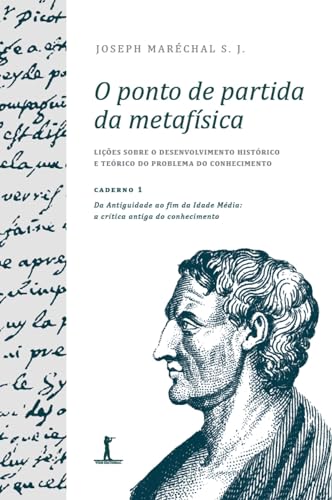 O ponto de partida da metafísica - Caderno 1: Da Antiguidade ao fim da Idade Média: a crítica antiga do conhecimento
Ver na Amazon →
O ponto de partida da metafísica - Caderno 1: Da Antiguidade ao fim da Idade Média: a crítica antiga do conhecimento
Ver na Amazon →
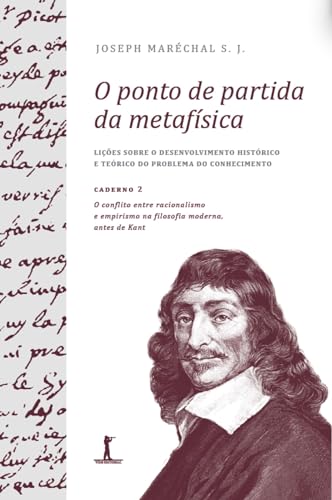 O ponto de partida da metafísica - Caderno 2: O conflito entre racionalismo e empirismo na filosofia moderna, antes de Kant
Ver na Amazon →
O ponto de partida da metafísica - Caderno 2: O conflito entre racionalismo e empirismo na filosofia moderna, antes de Kant
Ver na Amazon →
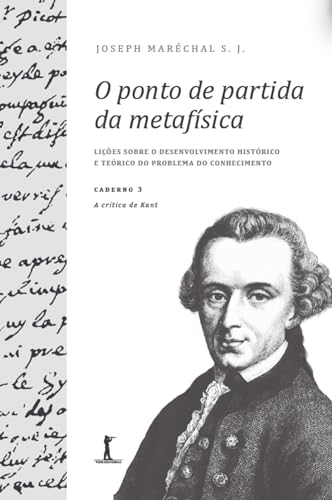 O ponto de partida da metafísica - Caderno 3: A crítica de Kant
Ver na Amazon →
O ponto de partida da metafísica - Caderno 3: A crítica de Kant
Ver na Amazon →
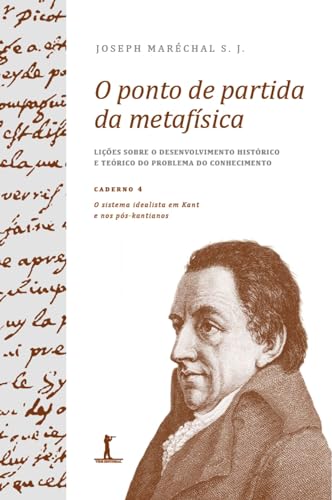 O ponto de partida da metafísica - Caderno 4: O sistema idealista em Kant e nos pós-kantianos
Ver na Amazon →
O ponto de partida da metafísica - Caderno 4: O sistema idealista em Kant e nos pós-kantianos
Ver na Amazon →
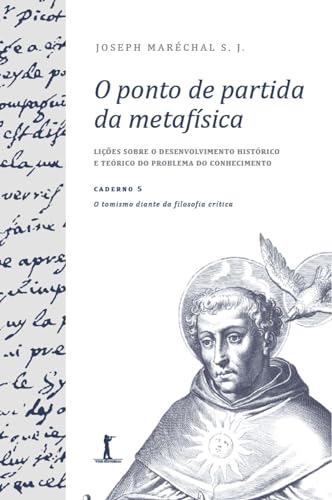 O ponto de partida da metafísica - Caderno 5: O tomismo diante da filosofia crítica
Ver na Amazon →
O ponto de partida da metafísica - Caderno 5: O tomismo diante da filosofia crítica
Ver na Amazon →← Articles