Few contemporary philosophers divide opinion as sharply as Judith Butler. For some, she is one of the most important thinkers of the twentieth century — someone who revolutionized our understanding of gender, sexuality, and power. For others, she is the ultimate symbol of a philosophy that lost itself in the labyrinth of its own language, producing deliberately obscure texts to mask shallow ideas. To understand why Butler provokes such extreme reactions, we must first grasp what she actually says — and then have the intellectual honesty to identify where the argument falters.
Who is Judith Butler?
Judith Butler was born in 1956 in Cleveland, Ohio, into a Jewish family. She studied philosophy at Yale, where she was shaped by German Idealism (Hegel), phenomenology (Husserl, Heidegger), and French existentialism (Sartre, Beauvoir, Merleau-Ponty). She later encountered the post-structuralism of Michel Foucault and Jacques Derrida, which would prove central to her mature work.
She is a professor at the University of California, Berkeley, and the author of a series of books that have shaped gender studies, queer theory, political philosophy, and ethics. Her book Gender Trouble (1990) is considered a founding text of queer studies. But Butler has also written on precarity, mourning, war, Judaism, and biopolitics — hers is a thought in motion, not a static thesis.
The Central Idea: Gender as Performativity
To understand Butler, we must begin with the distinction between sex (biological) and gender (social) — a vocabulary that would consolidate in feminism only from the 1960s–70s, but whose central insight Butler inherits from Simone de Beauvoir. Beauvoir wrote, in the classic The Second Sex (1949): “One is not born, but rather becomes, a woman.” Butler accepts this premise — but radicalizes it in a way that Beauvoir herself would probably have rejected.
Butler’s thesis is as follows: gender is not a stable identity that we have, like an object stored inside us. Gender is a performance — a constant repetition of acts, gestures, postures, speech, and behaviors that, over time, create the illusion of an underlying gender identity.
Here is Butler’s most celebrated formulation, from Gender Trouble:
“Gender is not a noun, but neither is it a set of free-floating attributes, for we have seen that the substantive effect of gender is performatively produced and compelled by the regulatory practices of gender coherence.”
What does this mean in practice? When a woman walks in a certain way, wears certain types of clothing, gestures in a certain manner, and adopts a particular vocal register, she is not expressing an innate femininity — she is constructing and reinforcing femininity through those repetitions. Gender does not precede the acts: it is produced by them.
The Difference Between Performance and Performativity
Butler is careful to distinguish between the two terms, though many readers conflate them. A performance implies a conscious actor who chooses a role to play — like a theatre actor who knows they are acting. This would suggest that people could simply “choose” another gender as if changing costumes.
Performativity, in Butler, is something different: it is a process that precedes the subject’s consciousness. Before you are able to make choices, you have already been interpellated as boy or girl, already inscribed within a matrix of norms that shapes your self-perception. Performativity is, in large part, involuntary and unconscious — it constitutes us before we can question it.
The Heterosexual Matrix
One of Butler’s most influential contributions is the concept of the heterosexual matrix (a concept Butler develops chiefly from Monique Wittig’s “heterosexual contract” and, to a lesser extent, from Adrienne Rich’s “compulsory heterosexuality”). The idea is that there is an implicit normative grid in Western culture that articulates three elements as if they were naturally linked:
- Biological sex (male or female)
- Gender (masculine or feminine)
- Sexual desire (heterosexual)
According to Butler, culture treats this trilogy as obvious and natural: if you were born male, you “should” be masculine and desire women. Any deviation — homosexuality, transsexuality, intersexuality, non-normative gender performances — is treated as abject, abnormal, pathological.
But this “nature” is a construction. The heterosexual matrix does not describe a biological reality — it produces what counts as real, normal, and intelligible. Identities that fall outside it are excluded from the field of full social recognition.
Bodies That Matter: The Materiality of Sex
In Bodies That Matter (1993), Butler responds to critics who accused her theory of dissolving the body into pure language. The question was: if gender is performative and constructed, what happens to biological sex? Is it also constructed?
Butler’s answer is subtle. She does not deny that there are material bodies — bones, hormones, chromosomes. What she argues is that the way we categorize, interpret, and make sense of those bodies is always mediated by cultural norms. The very binary distinction “male/female” is a classificatory choice that ignores natural variation (intersex bodies, hormonal spectrum, chromosomal variation) in favor of a taxonomy that serves social ends.
She uses the concept of materialization: the body “materializes” certain norms over time. The point is not to claim that the body is an illusion, but to investigate how gender norms inscribe themselves into the very flesh — posture, musculature, weight, hair, voice.
Precarity and Grief: The Political Butler
From the 2000s onward, Butler expanded her thinking toward political philosophy and ethics. In Precarious Life (2004) and Frames of War (2009), she develops the concepts of precarity and grief.
The central idea is that all lives are precarious — vulnerable, dependent on others, subject to harm and death. But precarity is not equally distributed. Some lives are treated as worthy of mourning when lost; others are not. The American soldier killed in combat receives a ceremony, a folded flag, a newspaper front page. The Afghan civilian killed in the same strike rarely has a name in Western news coverage.
Butler calls this grievability: a life’s capacity to be recognized as lost, to provoke public mourning. Lives that are not grievable — those of refugees, of Black people killed by police, of invisible workers — are lives that have been de-realized before being extinguished. The political struggle, for Butler, is also a struggle for the recognition of grievability.
The Weak Points: An Honest Critique
Up to this point, we have presented Butler’s ideas with seriousness. Now it is equally necessary to be serious in critical evaluation. There are consistent philosophical objections to her work that deserve attention — not as political attacks, but as legitimate intellectual challenges.
1. The Problem of Agency: Who Performs?
The most fundamental objection is philosophical: if the subject is constituted by performativity before being able to choose, who is the agent that resists or subverts the norm?
Butler wants to have it both ways: a subject sufficiently constituted by norms to lack a pre-social essence, yet sufficiently free to subvert those norms through “disruptive” performances. Critics argue this is incoherent. If performativity precedes and constitutes us so radically, where does the capacity for subversion reside? Is the subject trapped in a performative determinism or not?
Philosopher Seyla Benhabib raised this objection with precision: without a subject with some capacity for reflection and self-distance, Butler’s emancipatory politics becomes impossible. There is no way to struggle for recognition if there is no “I” that struggles.
2. The Style: Deliberate Obscurantism?
In 1998, Butler won the “bad writing award” from the journal Philosophy and Literature for the year’s most incomprehensible passage. The winning sentence ran:
“The move from a structuralist account in which capital is understood to structure social relations in relatively homologous ways to a view of hegemony in which power relations are subject to repetition, convergence, and rearticulation brought the question of temporality into the thinking of structure…”
Philosopher Martha Nussbaum, in a devastating 1999 article titled “The Professor of Parody,” argued that Butler’s hermetic style is not a mere aesthetic preference — it is a philosophically problematic strategy. By making her texts deliberately opaque, Butler:
- Creates the illusion of depth where there may be only verbal complexity;
- Prevents the testing of ideas by those outside the circle of initiates;
- Transforms the “subversive posture” into an academic product that serves university careers, not real emancipation.
Nussbaum is harsh, but the point carries weight. Philosophy that cannot be critically assessed because of its style is not rigorous philosophy — it is rhetoric.
3. The Erasure of the Material Body
Despite her efforts in Bodies That Matter, many critics — including Toril Moi and legal scholar Janet Halley — argue that Butler never satisfactorily resolves the tension between biological materiality and cultural construction.
There are differences between sexed bodies that have real consequences: pregnancy, menstruation, childbirth, certain physical vulnerabilities. When Butler treats biological sex as always already mediated by culture, she risks making politically invisible the experiences that affect women in specific ways — not because they are “essentially feminine,” but because they are biologically real.
Feminists working on reproductive health, domestic violence, and economic inequality frequently complain that Butler’s theoretical apparatus is of little use for concrete public policy analysis.
4. The Political Problem: Parody as Resistance?
Butler suggests that “parodic” performances — drag queens, crossdressing, non-normative gender identities — can subvert the heterosexual matrix by exposing the artificiality of gender. But there is a serious objection: does aesthetic subversion substitute for structural transformation?
Nancy Fraser, in a famous debate with Butler, argued that the politics of recognition (fighting for visibility and new identities) may divert attention from the politics of redistribution (fighting for economic equality, access to healthcare, decent work). A drag show in New York does not change the working conditions of a transgender woman living on the urban periphery.
Butler’s emphasis on performativity, discourse, and symbolic subversion may inadvertently favor a cultural-elite politics — academics, artists, people with the cultural capital to inhabit spaces of identity experimentation — at the expense of the material demands of the most vulnerable.
5. The Trans Children Question and Contemporary Debates
One point of contemporary tension deserves mention: Butler’s ideas inform much of the current debate about gender identity in children and adolescents. The premise that biological sex is a cultural construction — and that children can (and should) have radical autonomy over their gender identity — lies at the center of serious medical and ethical controversies.
Critics, including feminists such as Kathleen Stock (author of Material Girls, 2021), argue that Butlerian theory, applied without discernment to child development, can be used to justify irreversible medical interventions (puberty blockers, surgeries) on people who have not yet reached full cognitive and emotional maturity.
Butler has responded to these critiques in various interviews, generally framing the critics as allies of conservative and transphobic forces. But the philosophical question remains: how does the theory of gender as performance apply to children who, by definition, have a limited capacity for informed consent?
The Legacy: Why Butler Still Matters
None of these critiques nullify Butler’s contribution. She did something genuinely important: she showed that categories like “woman,” “man,” “heterosexual,” and “homosexual” are not natural and eternal, but historical and contestable. This de-naturalization has real philosophical and political value.
Her work on precarity and grievability opens urgent ethical questions: which lives count? who has the right to public mourning? These are not abstract questions — they cut across wars, genocides, immigration policies, and police violence.
And the theory of performativity, even with its internal problems, offers useful conceptual tools for analyzing how social norms inscribe themselves in bodies and subjectivities in ways that escape the consciousness of individuals themselves.
Conclusion: Reading Butler with Open Eyes
Judith Butler is a philosopher worth reading — but worth reading critically, not as a prophet. Her ideas on performativity are provocative and fertile; her analyses of precarity are politically urgent; her archaeology of gender norms is intellectually valuable.
But there are real incoherencies at the core of her theory. The subject who performs without a prior essence and yet resists and subverts is a philosophically problematic figure. The obscure style frequently functions as a shield against critique. And the politics of performative subversion risks being more effective on university campuses than in the living conditions of the most vulnerable women and queer people.
Reading Butler rigorously — embracing what works and questioning what falters — is precisely the kind of philosophical exercise she herself, in her best moments, invites us to perform. Philosophy need not choose between idolatry and dismissal: it can do what it does best, which is think.
For further reading: Gender Trouble (1990), Bodies That Matter (1993), and Precarious Life (2004), all by Judith Butler. For rigorous critique, Martha Nussbaum’s article “The Professor of Parody” (1999) is essential reading.
Recommended Books:
 Gender Trouble: Feminism and the Subversion of Identity
Ver na Amazon →
Gender Trouble: Feminism and the Subversion of Identity
Ver na Amazon →
 Bodies That Matter: On the Discursive Limits of 'Sex'
Ver na Amazon →
Bodies That Matter: On the Discursive Limits of 'Sex'
Ver na Amazon →
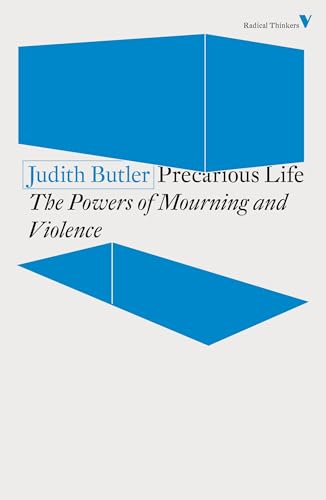 Precarious Life: The Powers of Mourning and Violence
Ver na Amazon →
Precarious Life: The Powers of Mourning and Violence
Ver na Amazon →
 Corpos que importam
Ver na Amazon →
Corpos que importam
Ver na Amazon →
 Vida precária (Col. Filô): Os poderes do luto e da violência
Ver na Amazon →
Vida precária (Col. Filô): Os poderes do luto e da violência
Ver na Amazon →
 Quadros de guerra: Quando a vida é passível de luto?
Ver na Amazon →
Quadros de guerra: Quando a vida é passível de luto?
Ver na Amazon →← Articles